
Senate committee advances bill to let attorney general enforce corporate-practice ban on private-equity–backed medical groups
Get AI-powered insights, summaries, and transcripts
Subscribe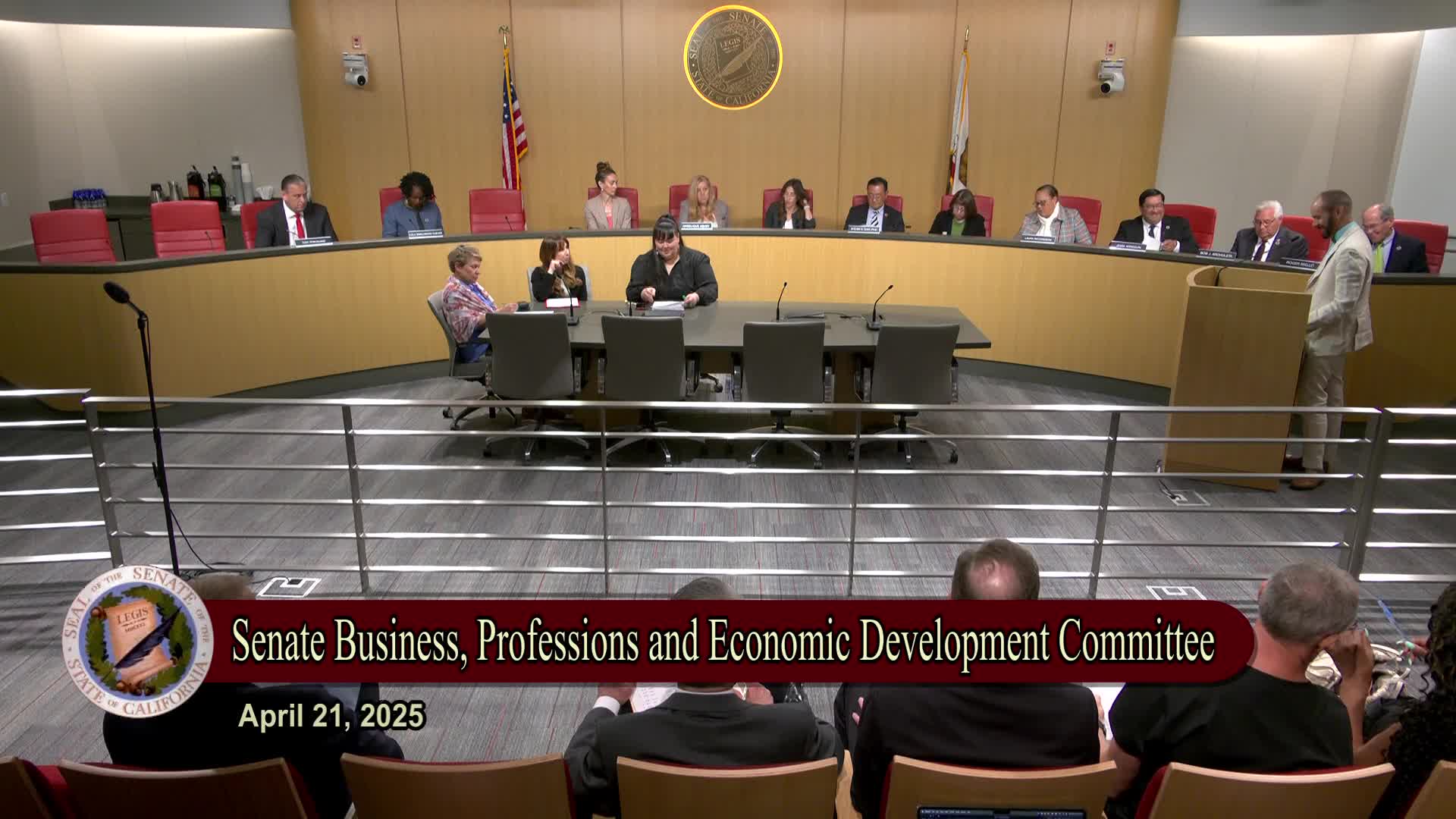
Summary
Committee approved SB 351 to give California Attorney General new enforcement authority targeting private-equity and hedge-fund influence in physician and dental practices; supporters cited research on rapid private-equity turnover and harms to care; opponents asked for a broader ownership-neutral approach and requested amendments.
Sen. Cabaldon’s SB 351, which would add an enforcement tool for the attorney general to address alleged violations of California’s corporate-practice prohibitions where private equity or hedge funds exert clinical influence, moved out of the Senate Business, Professions and Economic Development Committee after debate and a committee vote.
The bill’s author, Sen. Cabaldon, told the committee SB 351 is “a narrowly crafted, targeted update to California's corporate bar on the practice of medicine,” saying the measure is not intended to “hate on private equity” but to provide enforceable legal standards beyond medical board guidance. He said private-equity ownership of medical practices has “grown dramatically” and cited a rise in transactions, saying the average private-equity hold time for a medical practice has fallen to roughly two years or less.
Dr. Steven Obelowicz, a pediatrician who testified in support, described his experience after private-equity investors purchased his practice and, he said, began interfering with clinical decisions. "Their actions included limiting access and time for patients needing ongoing care, particularly for mental health, canceling COVID vaccine clinics during the pandemic, coercing physicians to prescribe a specific brand of formula that they had financial ties to... and attempting to dictate which medical equipment should be used," Dr. Obelowicz said. He urged the committee to adopt the bill to protect patient safety and to invalidate contracts that "muzzle" clinicians.
A broad coalition of provider organizations and professional associations offered support on the record, including the California Medical Association, the California Dental Association, the California Chapter of the American College of Emergency Physicians, the California Association of Orthodontists and others. Angela Hill with the California Medical Association identified CMA as a cosponsor.
Opponents — including Children's Choice Dental Care and representatives of dental support organizations (DSOs) and private dental operators — said they do not oppose the corporate-practice prohibition itself but urged the committee to avoid singling out private equity in statute. John Steinbritton, CEO of Children’s Choice Dental Care, said the company expanded to serve Medi-Cal children in part because of private capital. "Existing law already prohibits the corporate practice of medicine and dentistry and applies to all, not just to private equity firms and hedge funds," he said, and urged the author to amend the bill to apply across ownership structures.
Senators also questioned the bill’s scope. Senator Nilo said he agreed with the bill’s intent but worried it could intrude into routine management decisions — hiring and firing, billing and supply purchases — that can be legitimately administrative. Cabaldon said he expects to work with opponents on amendments to clarify definitions and scope.
The committee recorded a motion to pass SB 351 to the Senate Judiciary Committee; the chair announced the committee vote as "6 to 1" at the time and placed the item on call. The author and supporters said they will engage stakeholders on technical refinements but asked the committee to approve the bill for the next step.
SB 351 advances enforcement options for state actors while opponents pressed to broaden or clarify the measure so it does not distinguish by investor type when existing law already bars corporate interference in clinical decision-making.