
Board reviews Community Service Cycle 2; delegates allocation authority after approving list of awards
Get AI-powered insights, summaries, and transcripts
Subscribe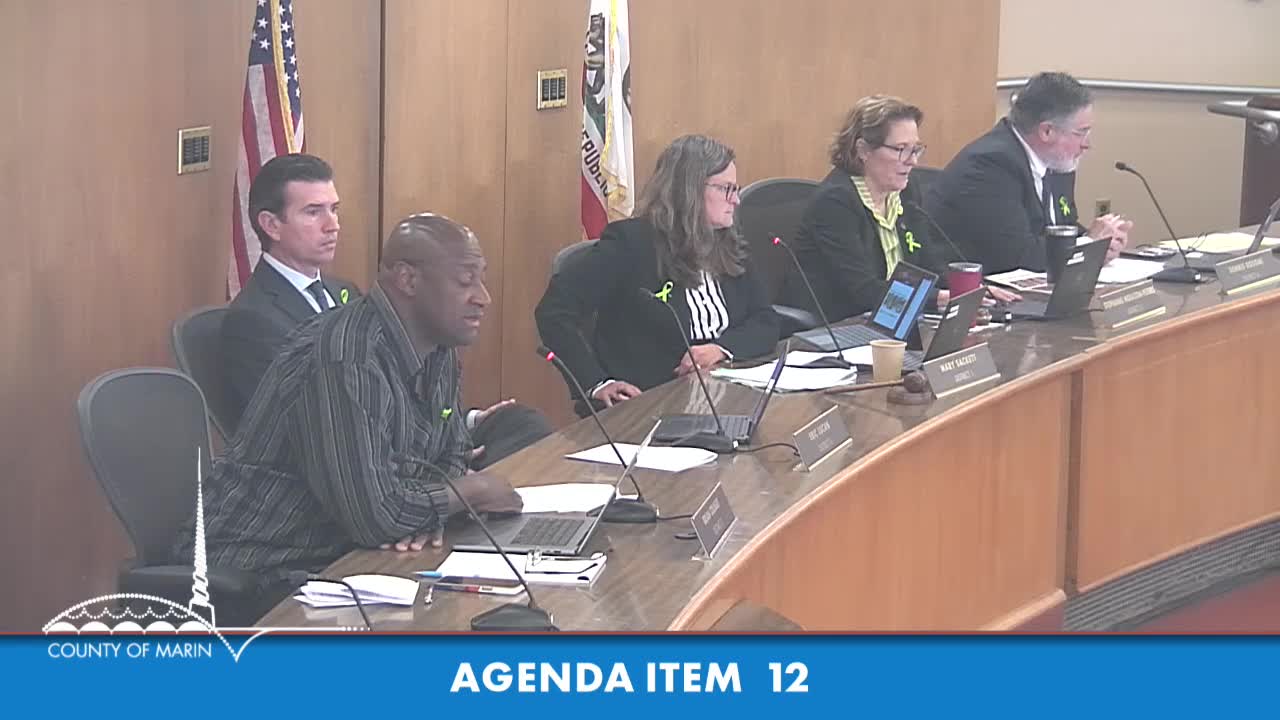
Summary
The board reviewed 97 applications requesting roughly $952,940 in Cycle 2 community service grants and delegated authority to the county executive to finalize allocations from a $200,000 target. Supervisors announced individual allocations during the meeting.
The Marin County Board of Supervisors reviewed applications for Cycle 2 of the county’s Community Service Grant program on April 22 and moved to delegate allocation authority to the county executive so funds can be distributed promptly.
County Executive Derek Johnson told the board the program is designed for one-time requests and community services; Cycle 2 received 97 requests totaling approximately $952,940 while the target allocation for this cycle is $200,000. The awards range from $1,000 to $10,000 per application and all applications were posted on the county website.
During the meeting supervisors announced recommended awards from the $200,000 pool, directing staff to finalize amounts and handle any remaining calculations administratively. Examples of allocations announced on the record by supervisors included: Supervisor Lukin (five awards at $8,000 each, including local youth and school programs), Supervisor Rodoni (multiple awards, typically $5,000 each to community groups), Supervisor Milton Peters (multiple small grants to southern Marin organizations), Supervisor Colbert and others named award recipients and amounts on the record.
Board action: The board moved to accept the report and delegated authority to the county executive to finalize grant allocations and distribute funds. Supervisors asked staff to consider additional requests if remaining funds permit and to coordinate any follow-up awards administratively.
Why it matters: The grant program is a recurring county-funded program that supports local nonprofits’ one-time projects and small capital needs. County staff noted the difficulty of selection because of many worthy applications and urged collaboration across funding programs. Recipients announced by supervisors included organizations addressing youth services, housing, the arts, food and nutrition, mental health and environmental programs.
Next steps: County executive staff will complete the distribution calculations, make awards, and return appropriate follow-ups as required by county grant processes. The public record lists the full set of applications and staff recommendations.