
Committee recommends adding 2% revenue stabilization reserve and updates TIF guidelines
Get AI-powered insights, summaries, and transcripts
Subscribe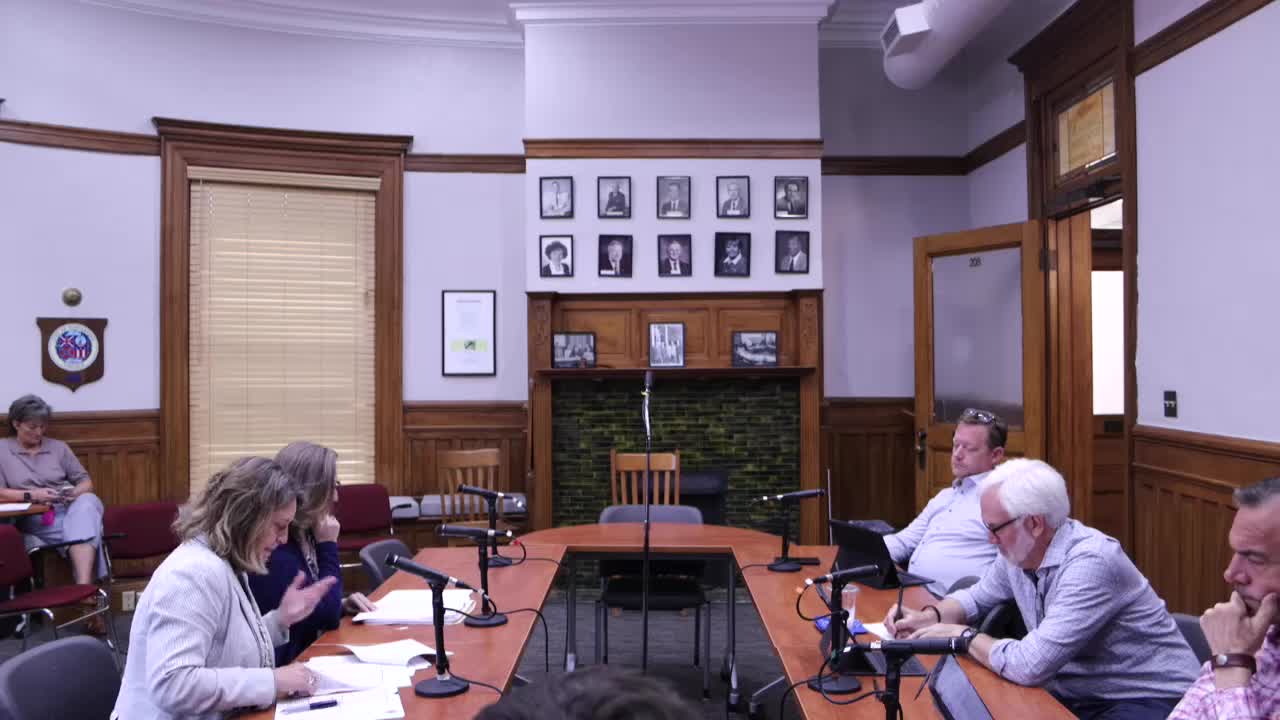
Summary
The finance committee recommended a resolution to create a committed revenue stabilization fund equal to 2% of general fund expenditures (excluding capital outlay), phased in over three years, and reviewed proposed guidelines for issuing Tax Increment Financing (TIF) debt including coverage and issuance limits.
The finance committee forwarded a resolution that would amend the city’s fund‑balance policy to add a committed revenue stabilization fund equal to 2% of general fund expenditures (excluding capital outlay and bond‑funded projects). Staff said the new reserve is intended to stabilize finances during revenue downturns and to improve debt ratings by increasing total fund balance.
City finance staff presented the rationale: on projected general fund expenditures of roughly $115 million, a 2% stabilization fund would be about $2.3 million. The policy change would allow the city three years to come into compliance with the new funding target. Staff said the city’s unassigned fund balance was about 25%—above the 20% policy minimum—and that the new commitment would reclassify part of that balance without immediately reducing liquidity.
Committee members also reviewed proposed Tax Increment Financing (TIF) guidelines. Staff said they included guardrails such as a not‑to‑exceed threshold for new TIF debt at 2.5% of general fund expenditures and coverage metrics intended to align with common underwriting practice (staff referenced a roughly 115% annual debt‑service coverage target used for feasibility analysis). Members asked whether revenues from one NDD/TIF could be used to support another and heard that structuring and legal limitations will determine inter‑project transfers; staff said the Cedar Valley project was expected to be revenue‑generating in the near term and could create capacity for future projects.
The committee voted to forward the resolution and TIF guidelines to the full council with a recommendation for approval. Staff said debt issuance for the recently approved project was expected to be sold in the coming days and that the policies aim to position the city for favorable market reception.