
Monterey Peninsula Water District outlines allocations; Carmel residents urge immediate release of credits
Get AI-powered insights, summaries, and transcripts
Sign Up Free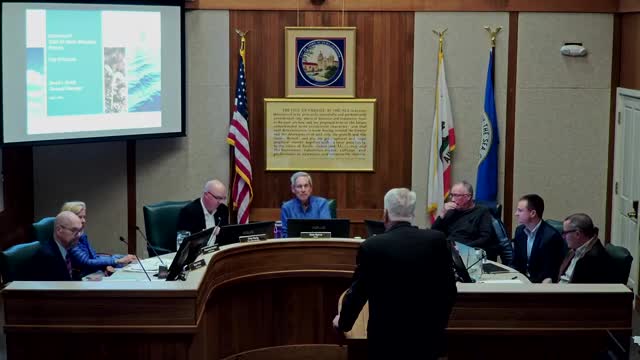
Summary
Monterey Peninsula Water District General Manager Dave Stolt briefed Carmel-by-the-Sea council on water allocations tied to Pure Water Monterey expansion. Residents and commenters urged the council to release water credits now for remodels and ADUs, and council signaled it will schedule a workshop for deeper review.
Monterey Peninsula Water District General Manager Dave Stolt told the Carmel-by-the-Sea City Council on July 1 that the recent Pure Water Monterey expansion will add “just over 2,000 acre-feet” to the peninsula’s supplies but that local jurisdictions still face allocation limits and a state cease-and-desist order that prevents new meter sets.
Stolt said allocations function like “a credit in your bank account” — they reserve water for a city but do not immediately provide meters. He described the district’s approach of holding a safety buffer of roughly 1,000 acre-feet and noted the district currently shows about 1,559 acre-feet available for allocation after that holdback. Stolt also told the council the district used a five-year average demand (about 9,500 acre-feet regionally) to set initial allocations and applied AMBAG growth forecasts to project future city needs.
The briefing included data specific to Carmel-by-the-Sea: Stolt said Carmel’s five-year average demand is about 636 acre-feet per year and that after reconciling RHNA housing numbers the district estimated a 25-year water need for Carmel of roughly 43 acre-feet. Under the allocation approach implemented March 1, Carmel received a partial initial allocation that, when combined with an existing balance, put the city at about 16 acre-feet available immediately. Stolt urged cities to be “expansive” in permitting where possible, and said the district will perform subsequent allocations if jurisdictions exhaust their credits.
Public commenters urged faster city action. A resident who spoke during public appearances asked the council to “release water credits to residents” to allow remodels and accessory dwelling units now, noting other peninsula cities had moved to release water. Resident Erin Allen said the council should “take a mindset of abundance” and adopt measures “as soon as possible” so projects can move forward. An online commenter, Will Rye, spoke separately during public comment on the Mills Act and historic-home tax relief; his remarks underscored resident interest in using allocations to support property preservation.
Council members thanked Stolt and council members asked few technical questions during the presentation. Mayor Byrne and staff said the allocation topic deserves more time for detailed questions and public interaction; council directed staff to schedule a workshop with the Monterey Peninsula Water District and city staff for a deeper discussion of allocations, how allocations would interact with the city’s housing element and ADU policies, and any available timing for resolving the state cease-and-desist order that prevents new meter sets.
Why it matters: the district’s allocation framework defines how much potable supply each city can assign to development and remodels. Carmel’s initial allocation of 16 acre-feet is small relative to the city’s annual demand profile but matters for individual projects that require water releases for building permits. Residents and local advocates appeared at the meeting urging more immediate municipal action to permit remodels and ADUs.
What’s next: staff will arrange a workshop with Monterey Peninsula Water District staff to walk the council and the public through allocations, the state process for getting meters set under the cease-and-desist order, and the district’s timeline for future allocations. Council and staff also identified outreach to homeowners and developers as a likely follow-up step so residents understand how to request water releases or permits when allocations are available.