
Costa Mesa adopts five-year consolidated plan, approves $1.08M in CDBG and HOME allocations for 2025-26
Get AI-powered insights, summaries, and transcripts
Subscribe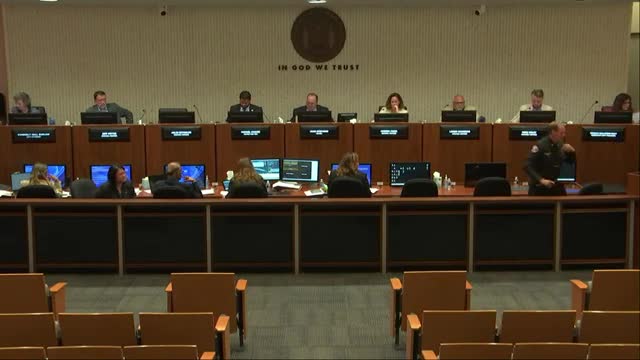
Summary
The council approved the 2025-29 consolidated plan and the city's 2025-26 annual action plan, committing CDBG and HOME funds to housing rehabilitation, public services, code enforcement and an affordable housing set-aside; council added direction to explore tenant legal support services.
The Costa Mesa City Council on Tuesday adopted the city's 2025-2029 consolidated plan and approved the 2025-26 annual action plan that allocates Community Development Block Grant (CDBG) and HOME Investment Partnerships Program (HOME) funds to housing programs, neighborhood improvements and nonprofit service providers.
Grant Administrator Michell Daley told the council the city expects an annual CDBG entitlement of $907,261 and an anticipated $172,000 in prior-year CDBG funds, for about $1,079,261 available for 2025-26 programs. HOME annual entitlement announced by HUD was $378,720 with previous-year and program-income reserves that increase HOME-eligible resources to roughly $2.0 million for the year.
Why it matters: CDBG and HOME dollars fund rehabilitation, tenant assistance, neighborhood infrastructure and social services serving low- and moderate-income residents. The council approved a slate of public-service recommendations from the city's Housing and Public Services Grants Committee and earmarked money for housing rehabilitation grants and rental assistance.
Key allocations and program details approved by the council include:
- CDBG: approximately $136,089 available for public service grants (the maximum the program allows), $251,000+ for the Wilson Street West Side Neighborhood Improvement Project, and roughly $385,000 to fund two full-time and one part-time code-enforcement positions that work in CDBG-eligible areas.
- HOME/housing rehabilitation: HOME funding of $319,323 is allocated to the city's housing rehabilitation program (loans and grants). To expand reach, staff added $75,000 in CDBG funds to the housing rehabilitation program to help homeowners—especially low-income seniors and mobile-home residents—who may not qualify under HOME's more restrictive rules.
- Tenant-based rental assistance: the council set $200,000 for tenant-based rental assistance aimed at helping roughly 15 households in the upcoming year (staff said the program uses a 60% area median income guideline for eligibility).
- Affordable housing and CHDO set-aside: the city reserved 15% of the annual HOME allocation for certified community housing development organizations (CHDO) and programmed about $1.5 million in HOME/reserve funds toward a potential affordable rental housing project; staff said the city will issue an RFP/RFQ to identify an eligible project and developer.
The Housing and Public Services Grants Committee reviewed public-service applications in March and recommended funding for several nonprofits. Andrea Schmidt, who represented the committee, said the panel used a revised scoring model and recommended awards scaled to maximize impact across organizations; among the recommended awards were Families Forward and Human Options, both allocated roughly $26,522 under the staff recommendation.
Council action and additions: Mayor Pro Tem Emmanuel Chavez moved to adopt staff recommendations; the motion passed 7-0. Councilmember Arlos Reynolds asked that staff examine opportunities to expand tenant legal-support services (including whether current providers can serve undocumented residents) and asked staff and the city attorney to report back on options; the council added that direction and it was accepted as part of the motion.
Public comment: Andrea Schmidt (Housing and Public Services Grants Committee) spoke about the committee's process; Resilience Orange County urged the council to consider stronger tenant protections and legal assistance for renters; multiple nonprofit representatives described program benefits in the city.
Next steps: Staff will finalize HUD submissions, execute subrecipient agreements for approved public-service grants, issue the RFP/RFQ for affordable rental housing, and return with additional detail on options for tenant legal services and outreach to program-eligible residents.
The council's action authorizes the city manager or designee to submit the consolidated plan and related HUD certifications and to execute necessary contracts and subrecipient agreements.