
Boise budget workshop: staff propose 16 new positions, 2.6% base pay increase as PERSI costs rise
Get AI-powered insights, summaries, and transcripts
Sign Up Free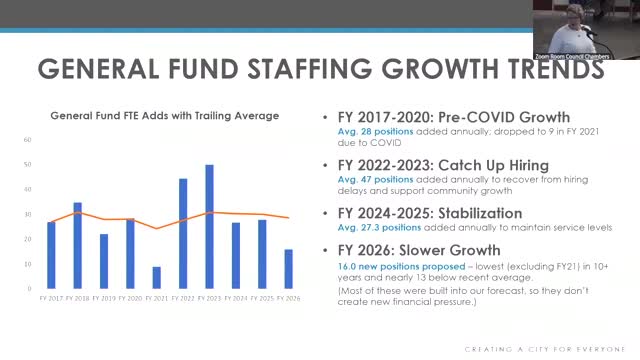
Summary
City staff told the council the FY2026 draft budget includes 16 new general-fund positions (including six police officers), a 2.6% base pay increase for employees and a reduced long-range salary forecast; staff warned that projected PERSI contribution increases will substantially raise employer costs.
City staff told the Boise City Council at a budget workshop that the FY2026 recommendation includes 16 new general-fund positions and a proposed 2.6% base pay increase for employees, while flagging big cost pressure from the Public Employee Retirement System of Idaho (PERSI).
Courtney Washburn, the city’s chief of staff, and Eric, who led the budget presentation, said the 16 positions are the fewest proposed in a decade (excepting 2021) and include six additional police officers, an ERP (enterprise resource planning) support team, forestry hires and other roles. Courtney said some positions were previously budgeted and are now coming online and that 2.3 existing housing positions will move to the general fund because of federal grant accounting changes.
Compensation and forecast: Staff proposed a 2.6% base increase this year, paired with a lowered long-term annual forecast (from 3% to 2.5%) for ongoing planning. "Our goals were to retain top talent, stay aligned with the market, reduce growth to promote long term financial health and safeguard the workforce stabilization process," Courtney said. Staff said performance pay and "flex rewards" remain part of total compensation. Eric and HR staff told council the 2.6% figure reflects current market rates across the state and likely the region.
PERSI pressure: Alicia and other finance staff outlined expected PERSI employer contribution changes: staff cited a rise for general employees from about 11.96% to 13.53% (FY26), with a projected rise to about 15.87% by a later year; public-safety rates were cited rising from about 14.65% to 17.62%. Alicia said those signalings from PERSI could mean cumulative, multi‑year cost increases measured in millions of dollars and that the city does not control PERSI rates.
Staffing specifics and risk tradeoffs: The budget includes four ERP-support positions (staff said they will return in the second workshop with a fuller justification and project plan). On forestry positions, staff told the council they analyzed contractor versus in-house options and concluded it is cheaper to hire two full‑time staff to perform required periodic inspections (trees are required to be inspected every eight years) given long-term costs and PERSI-related benefit loadings.
What council asked for: Council members requested more detail on the ERP positions' roles and costs, historical comparisons for health‑insurance contributions, and market comparisons between public and private compensation. Staff said they will provide those details at the next workshop and the budget book and that the multi‑year forecast can be revisited annually.
Ending: Staff presented the personnel package as calibrated to stabilize the workforce while preserving flexibility; several council members stressed yearly reevaluation and asked for more supporting data before final decisions.