
Chesapeake council approves multi‑year utility rate increases after public hearing
Get AI-powered insights, summaries, and transcripts
Subscribe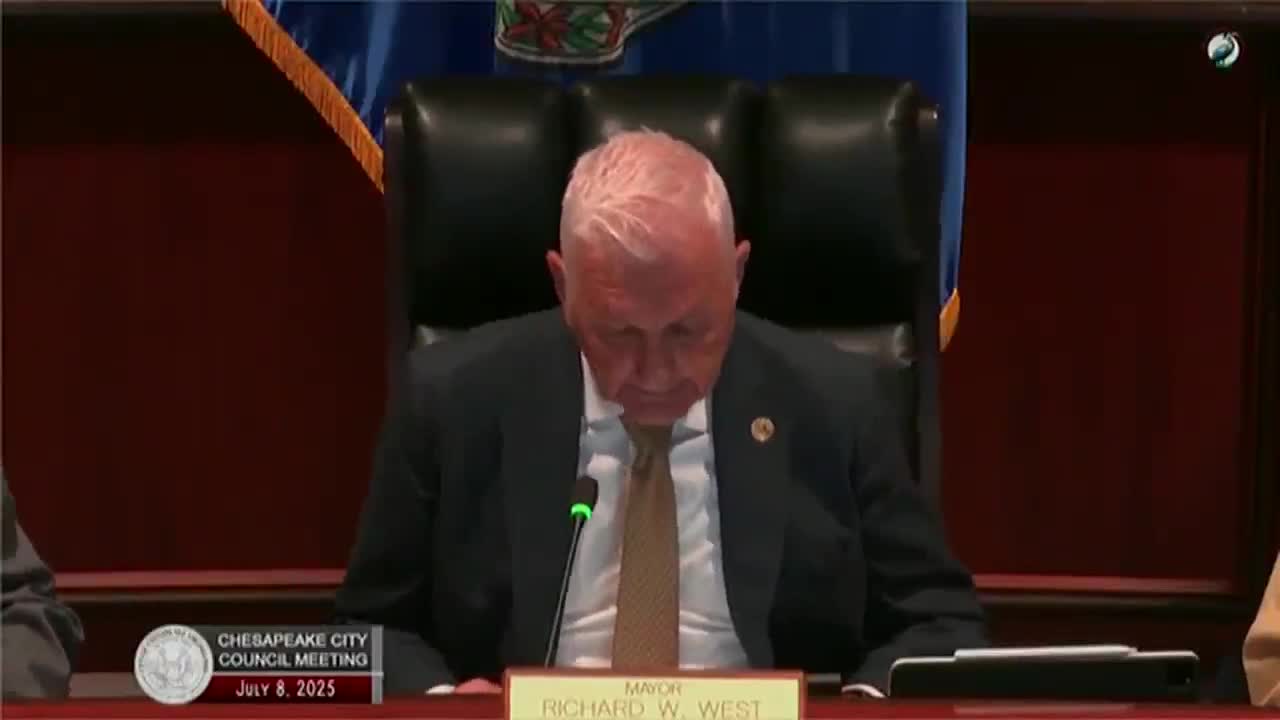
Summary
After a public hearing with residents who said the proposal lacked notice and transparency, Chesapeake City Council approved an ordinance to increase utility rates over multiple years by an 8‑1 vote. City staff said the raises will fund replacing aging water and sewer infrastructure and will be reviewed annually.
The Chesapeake City Council on July 14 approved an ordinance amending Chapter 78 of the Chesapeake City Code to raise utility rates over multiple years, adopting the measure by an 8‑1 vote after a public hearing where several residents objected to the timing and notice of the increase.
City officials said the increase is intended to fund replacement of aging water and sewer infrastructure. City Manager Geiss and Public Utilities Director David Jurgens told council the utility operates as an enterprise fund, paid by ratepayers rather than the general fund, and that the increases provide revenue stability needed to plan and borrow for large projects.
Residents who spoke during the public hearing urged the council to delay or explain the proposal more fully. “This is not the time to be raising rates,” said Vic Nichols, representing SELF, saying the rise had been “snuck in.” Dr. George Reid of New Chesapeake Men for Progress said residents felt “ambushed” and faulted the city for what he called insufficient transparency. Cliff Randolph and Marquila Moore also urged more public engagement; Moore pressed the council to clarify use of tax increment financing, to prioritize fixing the source of flooding at a water treatment plant and to explain how a roughly $78 million need tied to rates relates to a separate $330 million South Central Water Sewer Transmission Line project.
City staff and council members responded with schedule and technical details. “We did have two publicly advertised and publicly held meetings relative to this specific topic,” City Manager Geiss said, adding the hearing itself was properly advertised. David Jurgens, the city’s public utilities director, described aging infrastructure: “We have infrastructure that is 110 years old,” he said, noting many distribution pipes date from about 1915 and that sewer lines commonly hit the end of useful life around 70 years.
On amounts, staff described the expected effect for an average household in multiple ways during the meeting: one estimate presented was an increase of about $3 per month (roughly $6 on the bimonthly bill), and staff later cited an estimated $3.10 increase on a bimonthly residential bill based on a household using 5,000 gallons per month. City staff emphasized actual increases depend on usage and billed quantities.
Under the ordinance as presented, the council said, previously approved adjustments (2.9 percent increases starting Jan. 1 of coming years) would be supplemented by an additional 2 percent to reach a 4.9 percent increase for 2026 and 2027, and the ordinance projects a 4.9 percent increase each year thereafter through 2032 unless council intervenes. “It would automatically be increased. Council can always decide to come back and amend that,” Geiss said, adding that utility staff will come to council annually with updates.
Council members pressed staff on the long projection. “I think it might be more palatable for our citizens if we didn't project out so far because it's very difficult to know so far in advance what the needs will be,” Council member King said. Staff replied the multi‑year projection is a financial best practice to establish stability for borrowing and planning but reiterated the council may revise the schedule in future years.
The ordinance was adopted by a vote of 8 in favor and 1 opposed. The council did not provide a roll‑call of individual votes in the transcript. City staff said the utility fund is separate from the general fund and that surpluses in the general fund are typically recommended to council for capital projects. Several public commenters requested an explicit accounting of recent surpluses and detailed plans for how rate revenue would be spent in specific neighborhoods.
Council members directed staff to continue annual reporting. The council’s approval allows the multiyear rate schedule to be implemented as written but leaves open the option for the council to modify or suspend scheduled increases in future sessions.