CBO outlines budget update: state enacted budget holds 2.3% COLA, $8.5M in one-time aid estimated for district
Get AI-powered insights, summaries, and transcripts
Sign Up Free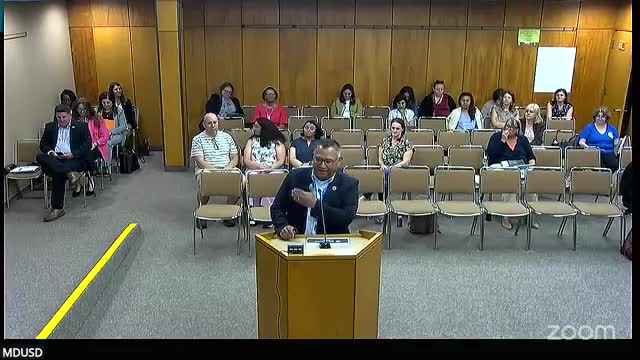
Summary
Chief Business Officer Adrian Vargas briefed the board on how the state’s enacted 2025–26 budget affects Mt. Diablo Unified, including COLA, one‑time grants and fiscal risks.
Chief Business Officer Adrian Vargas delivered the district’s 2025–26 budget update on Aug. 13, describing state actions that affect district revenues and key fiscal risks for the coming year.
Vargas told trustees the state enacted budget maintains a 2.3% cost-of-living adjustment (COLA) for LCFF and many categorical programs and includes one‑time discretionary block grant funding. He cited a statewide allocation figure discussed at adoption that, for Mt. Diablo, staff currently project could translate to roughly $8.5 million in one‑time discretionary funds; Vargas described this as an estimate to be refined at the district’s first interim report. The enacted budget also included an additional learning recovery block grant allocation the district estimates at about $1.5 million and a TK add‑on estimate between $2.2 million and $2.6 million depending on enrollment and attendance.
Vargas highlighted several risk factors: the enacted budget includes roughly $1.9 billion in deferrals that push some state cash‑flow from June into July 2026; local property‑tax timing (including wildfire impacts) and enrollment/attendance (the district uses a 93.5% attendance ratio in its models) will materially affect revenue; and bargaining-unit settlements that remain open could change district obligations. He noted the district adopted its budget before the state signed the final budget and that staff plan to present the updated revenue estimates in the first interim report in December and reflect adjustments then.
Trustees asked questions about the cyclical nature of California revenue and operational implications of attendance declines; Trustee Lawrence raised concerns that enforcement and immigration‑related fears could reduce attendance and thereby reduce district revenue. Vargas recommended staff monitor enrollment and attendance closely and use recent changes in independent study rules to mitigate attendance impacts where appropriate.
Next steps - Staff will include enacted budget adjustments in the first interim budget presentation in December 2025. - Business Services will monitor local tax data, enrollment and bargaining outcomes and report back as estimates firm up.
Vargas said the district will continue monitoring federal and state policy changes that affect categorical programs and one‑time funds and will update the board through the budget calendar.