Council awards broadband public‑private partnership to Smart Fiber Networks to build city‑owned fiber backbone
Get AI-powered insights, summaries, and transcripts
Sign Up Free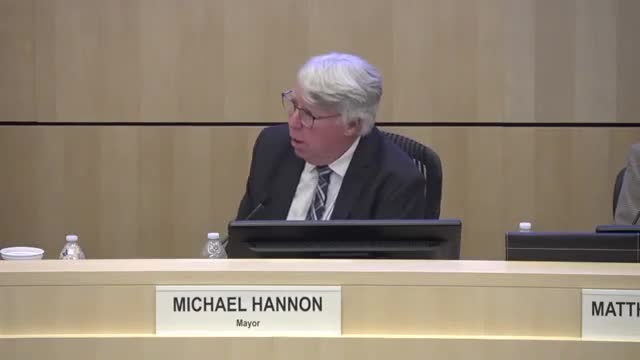
Summary
Newark City Council approved a public‑private partnership with Smart Fiber Networks to build a city‑owned fiber backbone, provide free Wi‑Fi at four parks and enable open access for local ISPs. The $3.28 million project is funded with ARPA, state AB 179 funds and PEG monies; the contract passed unanimously July 24.
Newark City Council on July 24 voted unanimously to award a public‑private partnership contract to Smart Fiber Networks to build a city‑owned fiber backbone, provide free public Wi‑Fi at four parks and create an open‑access model that prospective internet service providers (ISPs) can use to offer competitive broadband services.
City staff described the project as the first phase of a 10‑year broadband strategic plan developed with Government Technology Group (GTG). The backbone will connect city facilities including City Hall, the Newark Community Center and Silliman Center and will enable Wi‑Fi in four parks identified in the plan: Newark Community Center Park, Birch Grove Park, Jerry Raber (Ash Street) Park and Mel Nunez Sports Field Park. The high‑level design follows a mix of aerial and underground routes intended to minimize street disruption.
Total capital cost for the three implementation phases is capped at $3,280,000, funded by $1,000,000 from American Rescue Plan Act (ARPA) allocations, $1,800,000 from state funds secured via AB 179 and up to $700,000 from the city’s PEG (public, educational and government) account. Smart Fiber Networks proposed a 60/40 revenue split in which the company retains 60 percent of broadband revenue and the city receives 40 percent; staff explained the city’s 40 percent share will be used to sustain ongoing maintenance and future upgrades after the first five years of maintenance included in the contract.
Information Technology Director Edwin Miranda and Smart Fiber CEO Steve Stukas told council the network is scalable and ‘open access,’ meaning multiple ISPs can use the infrastructure, which staff said will improve competition, affordability and reliability. Staff also said Smart Fiber is pre‑qualified for federal BEAD (Broadband Equity, Access, and Deployment) grants; the city will pursue additional grant funding to expand service to unserved and underserved neighborhoods.
Council members asked how the network could expand and whether private development proposals could tie into the backbone; staff and the vendor said the design allows future expansion and that private partnerships or grant awards would be used to extend service. Council members also asked about affordability targets; staff said BEAD guidance aims for low‑cost consumer plans in the range of roughly $30–$35 per month for eligible households and the city will seek ISP agreements aligned with affordability goals.
Before the vote, council praised the staff for securing state funding and for planning an infrastructure approach that could lower long‑term telecom costs for city facilities. The council voted unanimously to adopt the resolution awarding the contract and to proceed with capital improvement project No. 1418.
What’s next: the city will execute the P3 contract with Smart Fiber Networks, begin the first implementation phase and apply for federal BEAD/other grants to expand the backbone. Staff said the project is not expected to require new general‑fund revenue; it is funded entirely from ARPA, AB 179 and PEG funds.