
UNICEF deputy warns Gaza children are dying, urges 500 trucks a day of aid and commercial access
Get AI-powered insights, summaries, and transcripts
Subscribe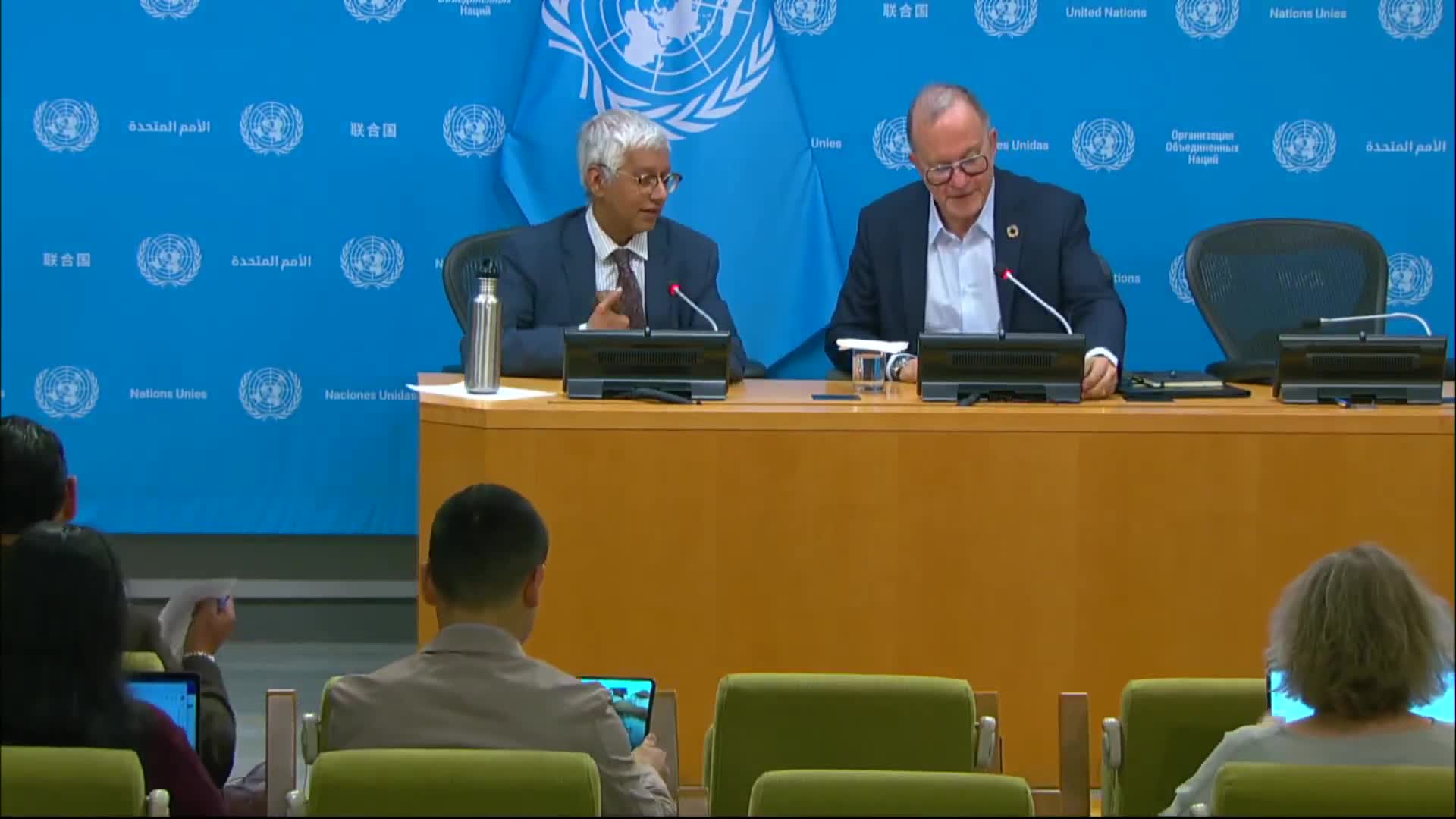
Summary
Ted Chaiban, UNICEF deputy executive director, described grave child malnutrition and deaths in Gaza, called for scaled humanitarian and commercial access (about 500 trucks a day), and said UNICEF has delivered dozens of trucks but needs far more to prevent famine.
TED CHAIBAN, UNICEF deputy executive director, told reporters after a five-day mission to Israel, Gaza and the West Bank that children in Gaza are facing “deep suffering and hunger” and that the situation has reached “a grave risk of famine.”
Chaiban said “over 18,000 children have been killed in Gaza since the beginning of the war,” an average of about “28 children a day,” and that two indicators have now exceeded famine thresholds. He said more than 320,000 young children are at risk of acute malnutrition and that global malnutrition in Gaza is “now at over 16.5 percent.”
The briefing outlined UNICEF’s ongoing relief work and what Chaiban called urgent gaps. UNICEF is delivering water and medical support, he said, including about 2,440,000 liters of safe water per day in northern Gaza reaching some 600,000 children (roughly 5–6 liters per person per day). UNICEF has rebuilt vaccine cold-chain capacity and continued vaccination campaigns, including a polio campaign in February, and remains active in 170 clinics treating malnourished children, he said.
Chaiban described visits to stabilization centers where “acutely malnourished infants” lie “a little more than skin and bone,” and recounted meeting a 10-year-old boy, Ahmed, who saw his sister die after an airstrike while they waited at a UNICEF-supported nutrition clinic in Dariballah.
On access and logistics, Chaiban pressed for both humanitarian and commercial traffic into Gaza. He said UNICEF had 500 trucks of supplies staged across Egypt, Jordan, Ashdod and Turkey and that some supplies have begun moving. Chaiban said UNICEF delivered 33 trucks of infant formula, high-energy biscuits and hygiene kits in recent days; in a later answer he said 97 trucks had entered in recent days, of which 33 focused on infant feeds and sanitation kits.
“Every modality needs to be used,” Chaiban said of aid deliveries, but he warned that airdrops cannot substitute for the volume that road convoys provide. He called for opening multiple gates and routes, allowing commercial goods and dual-use items such as fuel and water-system supplies, and reducing bureaucratic delays so trucks are less vulnerable to diversion or looting. “We need to flood the strip with goods from all channels, all gates,” he said.
Chaiban also urged additional funding. He said UNICEF’s appeal for Gaza was “critically underfunded,” noting, for example, that only about 30 percent of health and nutrition needs were covered. He emphasized that while humanitarian pauses had eased access at times, those pauses did not constitute a ceasefire and that a sustained ceasefire and political progress were needed to protect children and allow relief to reach all who need it.
During a question-and-answer period, reporters asked whether Israel was permitting baby formula and why commercial goods faced barriers. Chaiban said Israeli authorities had asked UNICEF to increase infant-formula deliveries and that the remaining challenges were procedural — speed of truck turnaround, opening several gates to reduce predictability and looting risks, and allowing commercial traffic so markets can supply protein and other food items.
Chaiban repeatedly framed the response as multifaceted: food and specialized therapeutic foods to treat acute malnutrition, safe water and sanitation to prevent disease, psychosocial support for traumatized children, and commercial supplies to stabilize markets. He said children can physically recover if specialized foods and sustained supplies reach them, but that longer-term risks such as stunting and mental-health damage grow the longer inadequate nutrition and trauma persist.
The briefing included questions from AFP, Altuzar English, China Central Television and IPS News. Chaiban noted meetings in the West Bank and with Israeli children affected by the war, and said the choices made now would determine “whether tens of thousands of children live or die.”