Artist team previews two concepts for Chestnut Avenue I-5 underpass public art
Get AI-powered insights, summaries, and transcripts
Sign Up Free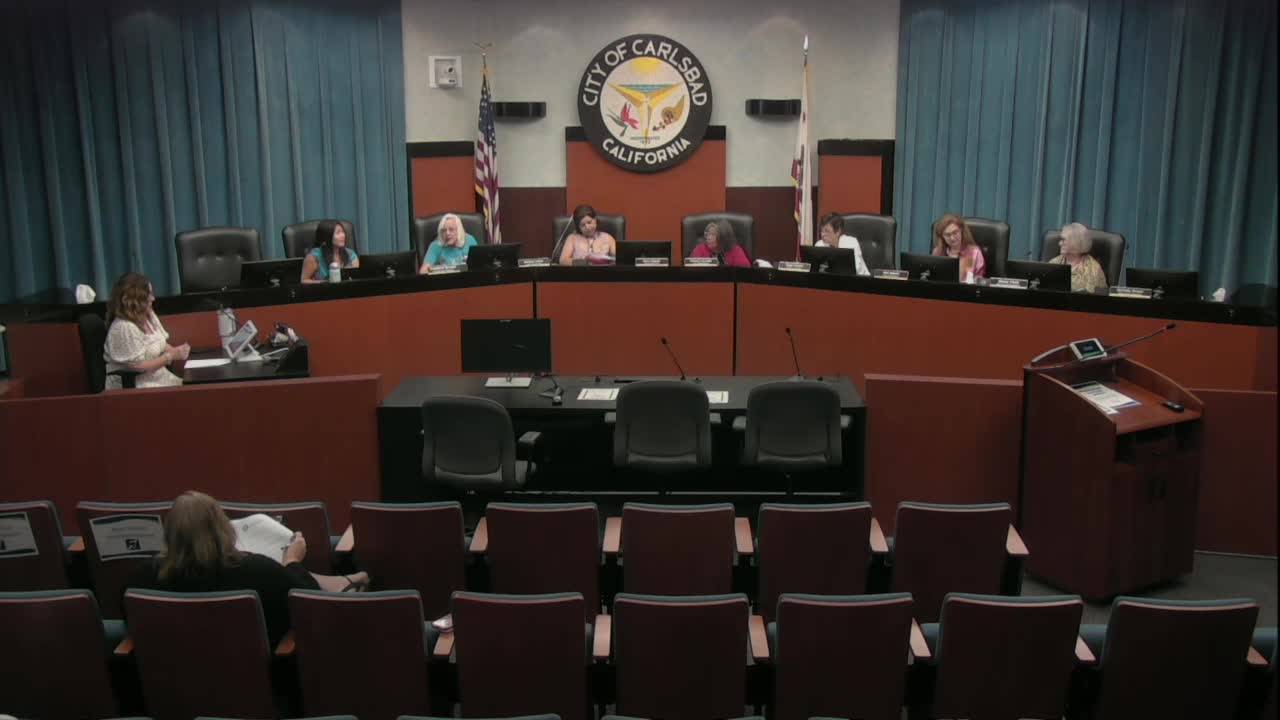
Summary
Artist team Green Beam presented two early design concepts—"community silhouettes" and an oversized hat/assemblage concept—for the Chestnut Avenue I-5 underpass public-art project; staff highlighted Caltrans design and safety requirements and outlined next steps for community feedback and Caltrans approval.
The Green Beam artist team and city staff presented early concepts Sept. 4 for a public-art installation at the Chestnut Avenue Interstate 5 underpass, where Caltrans and city technical standards will determine final design and approval.
Crystal Roa, cultural-arts program manager, said the Chestnut Underpass project has a $400,000 capital allocation and that the city selected Green Beam on Jan. 4, 2024. She summarized Caltrans requirements for transportation art: artworks must reflect local history and character, use durable non-reflective materials, avoid text, logos or driver distractions, and maintain sight lines and airspace.
Artist Brian (Green Beam) described the setting and community outreach the team has completed and said the designers "got really inspired by the idea of rather than trying to isolate the artwork on, like, the 4 corners of the underpass, but actually to try to take on a series of concepts that would allow us to make this more of an experiential type thing that takes on the totality of both walls." He noted the existing raised concrete texture and said the team is exploring ways to integrate the artwork with that pattern.
Artist Freyja (Green Beam) presented two early concepts. Concept 1, "community silhouettes," uses a color story that moves from land to sea and layered silhouette imagery reflecting local activities (walking, biking, surfing, skateboarding, family life, Barrio history). Concept 2 uses oversized cut-metal "hats" as a poetic, abstract assemblage that would create layered shadow play and reference local symbols such as flower fields and cultural hats. Freyja said the team would collect photographs and obtain model releases where necessary for any figurative references.
Staff described an outreach program (in-person and virtual events, youth comment cards and a word-cloud summary of community priorities) and next steps: an online survey this fall, a November Arts Commission presentation of refined designs, concurrent Caltrans application review, and planned City Council consideration in early 2026 if Caltrans and council approvals align.
Commissioners praised outreach and suggested the team include Barrio history and Latino cultural signifiers while complying with Caltrans restrictions on portraits and text. Staff noted a required long-term maintenance agreement will accompany the Caltrans approval and that the city will be responsible for maintenance.
The commission provided design feedback; no formal action or artist selection occurred at this meeting.