State Library of Iowa previews 'Level Up at Your Library' summer-reading toolkit for 2025
Summary
In a statewide webinar, State Library of Iowa staff outlined downloadable templates, program ideas, checkout kits and outreach strategies for this year’s iRead "Level Up at Your Library" summer-reading campaign and urged libraries to register and use the resource-guide code by June 1, 2025.
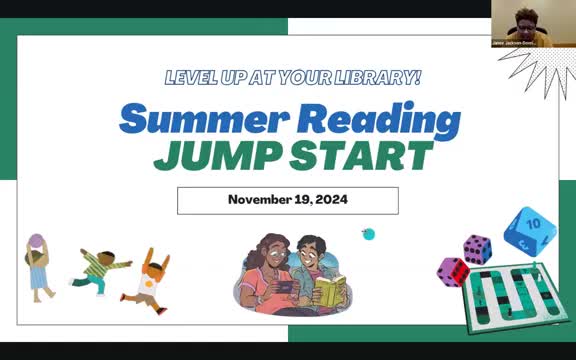
The State Library of Iowa walked librarians through downloadable templates, program ideas and checkout kits for the 2025 “Level Up at Your Library” summer-reading campaign during an online training session. The presentation, led by the library’s youth services consultant, explained how libraries can use Canva templates, iRead artwork and a multi-page resource guide to plan programs for children, tweens and teens.
The session matters because the State Library supplies free graphic templates, a large resource guide and a new slate of games and STEM kits that local libraries can borrow to stage summer programs and outreach. Janae Jackson Doreen, youth services consultant for the State Library of Iowa, told attendees, “Make summer reading your own,” and repeatedly advised libraries to adapt ideas to fit staff capacity and community needs.
Doreen, joined by Samantha Bowers, continuing education consultant, and Becca Bolin, content and development manager for iRead, showed artwork options from multiple artists and described Canva templates the State Library will publish for bookmarks, reading logs, bingo sheets and customizable calendars. The presenters said the new templates will be finalized by the end of January and posted in February on the State Library web page for the Summer Library Program. Doreen also noted a news bulletin with download instructions was emailed to library directors on Nov. 6 and reminded attendees to “please use that code by June 1, 2025.”
Most of the webinar detailed program ideas and materials, organized by age group. Presenters highlighted examples from the resource guide: sensory-play and picture-book scavenger hunts for ages 0–5, book-cover bingo, life-sized board games and LEGO races for elementary-age patrons, and Perler-bead crafts, escape rooms and puzzle competitions for teens. The presentation also emphasized multiage uses of the iRead artwork and suggested prizes ranging from stuffed-animal baskets and LEGO kits to gift cards and experience-based rewards, such as after-hours teen events.
Practical implementation details were included. The State Library said it will offer a new set of games and kits for checkout through the STEM-to-Go program; games will circulate for five weeks with no renewals. Presenters named specific kit items currently in the collection (Jenga, Dominoes, Taco Cat Goat Cheese Pizza, Bee-Bots and similar tabletop games) and said the State Library will post a full list on the STEM-to-Go and story-time kit web pages. Doreen also described resource-guide features and navigation: icons mark age-appropriateness (EL = early literacy; C = children; T = teen; A = adult; F = family; AA = all ages) and the guide includes fundraising templates, decorating tips and ready-to-use program templates.
The webinar included outreach advice for schools and daycares: drop off flyers, provide short videos for classroom use, place ads in school papers or request PA announcements, and coordinate scheduled visits so libraries can plan staffing. On partnerships, presenters recommended local vendors and performers and noted The Dealt Hand, a local game-teaching company, as an example vendor; Joe Roth of that company was described as willing to provide game-instruction sessions and murder-mystery or gaming events for a fee (the presenters cited an example rate of $65 per hour for a three-hour engagement).
Attendees asked questions in chat and polls; the presenters collected ideas on theme direction and prize types, and encouraged librarians to join scheduled summer-reading office hours, register via the State Library web page and submit program ideas for the 2026 resource guide. Doreen closed the session with a reminder to protect staff capacity: “Comparison is the thief of joy,” she said, urging librarians to pick ideas that fit their communities and limits.
The training provided links and next steps: download the resource guide (one download per library), use the code by June 1, 2025, check the State Library of Iowa Summer Library Program web page for Canva templates and register for open office hours to ask implementation questions. No formal votes or policy changes were taken during the webinar.