
Muscatine County supervisors approve one-time exception to excess vacation policy for an employee
Get AI-powered insights, summaries, and transcripts
Subscribe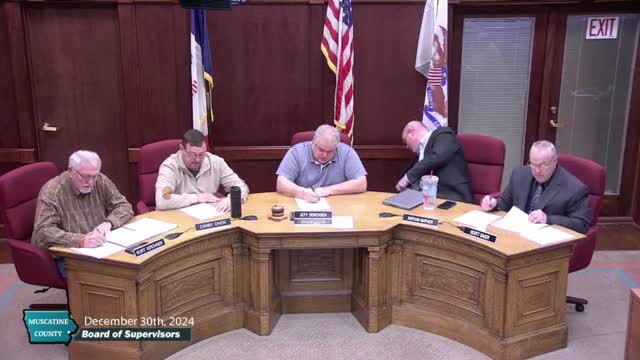
Summary
On Dec. 30, 2024, the Muscatine County Board of Supervisors approved a one-time exception to the county's excess vacation policy for a single employee, and directed staff to consider a longer-term revision to the county employee handbook during the 2025 budget process.
The Muscatine County Board of Supervisors on Dec. 30, 2024, approved a one-time exception to the county's excess vacation policy for a single employee and discussed whether to pursue a permanent change to the employee handbook.
The board voted to grant the exception after an extended discussion in which supervisors and staff described the employee's expanded duties and difficulty taking time off. County officials said the request was unusual and that the board has not previously paid out excess vacation under the current policy.
Board members emphasized two competing concerns: the practical reality that some managerial positions are hard to cover and the fiscal risk of opening a permanent buyout option. Supervisors asked staff to bring a budget-year proposal that would model the cost of any broader policy change and said they favored piloting any buyout with a limited amount (several supervisors suggested an initial one-week limit to gauge interest and fiscal impact).
County administration told the board it would return during the 2025-26 budget process with a plan to address step and pay adjustments across the organization and to present options for whether and how to allow vacation buyouts in the future. The immediate one-time exception approved by the board applied only to the individual request; the board did not adopt a permanent change to the handbook at the meeting.
Board members repeatedly raised payroll- and budget-related concerns: allowing widespread vacation buyouts could increase payroll costs if many employees chose to sell leave rather than take time off; conversely, supervisors noted using overtime or comp time to cover uncovered duties could offset some of that cost. The board also discussed donation and pooling mechanisms in the county's existing leave policies.
The motion to approve the specific one-time exception was made by Supervisor Nathan and seconded by Supervisor Scott; the board voted in favor and the motion carried. The board asked administration to prepare a proposed policy amendment and fiscal analysis for consideration during next year's budget process.
The board's discussion made clear the approved exception applied only to the single request before it; supervisors said any permanent change would require a separate ordinance or handbook amendment and a clearer funding plan.