
Puget Sound leaders urge $2.5 million for SR 167 implementation plan, warn of $94 million shortfall on 405/SR 167 projects
Get AI-powered insights, summaries, and transcripts
Subscribe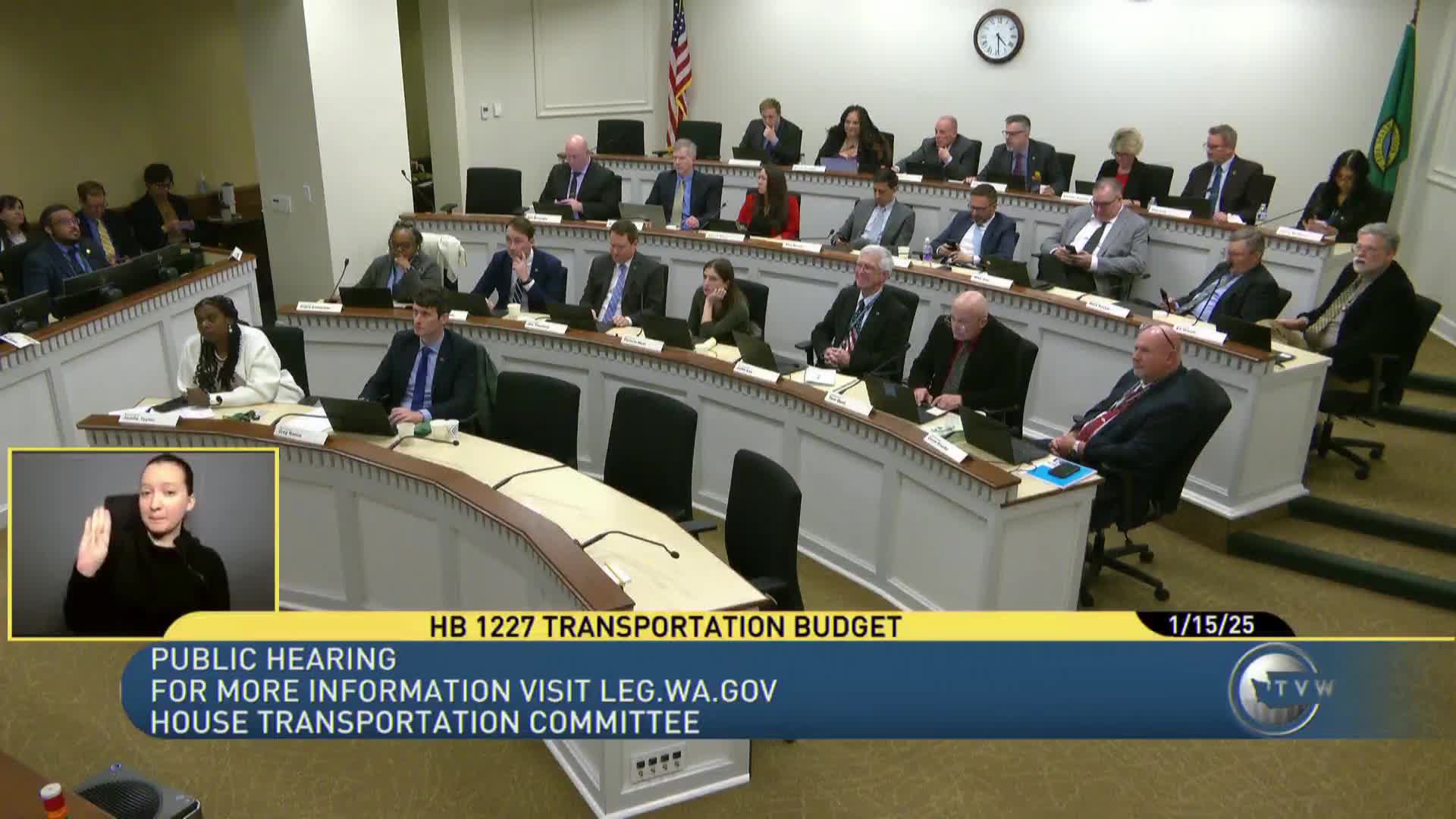
Summary
City and regional officials testified that the SR 167 master plan needs an immediate $2.5 million implementation planning allocation and that four I‑405/SR 167 projects under construction face a combined $94 million funding gap caused by rising costs.
Municipal officials, chambers and regional public‑transit advocates told the House Transportation Committee that the I‑405/SR 167 corridor faces both a planning shortfall and construction cost pressure.
Nut graf: Multiple jurisdictions urged lawmakers to fund a $2.5 million SR 167 implementation plan so that investments along the I‑405/SR 167 corridor can be prioritized and phased equitably, and several local officials said four projects already under construction along the corridor need an additional $94,000,000 to close a funding gap created by escalating costs.
Mayor Nancy Backus of Auburn said the SR 167 corridor has been "historically underserved" and asked the committee to include $2,500,000 to develop a prioritized phasing and funding strategy with partners and stakeholders. Chad Buren, public works director for the city of Kent, echoed that request, telling the committee the funding is essential to prioritize multimodal options, address safety and support economic growth.
Councilmember Jared Newenhous (Bellevue) and Councilmember Jenny Aderks (Bothell) and other local leaders asked the committee to fully fund four critical projects currently under construction on I‑405 and SR 167, and warned those projects face a combined $94,000,000 shortfall due to escalating costs. Newenhouse said the projects "will create a seamless, fast and reliable toll corridor all the way from Lynnwood to Puyallup" and tied timely delivery to Sound Transit bus rapid transit plans.
Speakers noted that portions of the corridor were combined into a single tolling corridor by the 2019 legislature, which included commitments to planning and improvements; several witnesses asked the legislature to honor that commitment and to preserve the schedule for projects currently under construction.
Ending: Local officials asked the committee to adopt the $2.5 million SR 167 implementation planning allocation and to close construction funding gaps for the four corridor projects so the region can deliver coordinated toll, transit and safety improvements on schedule.