
Boston councilors press Boston Housing Authority on repeated elevator outages, resident safety at Ruth Barclay
Get AI-powered insights, summaries, and transcripts
Subscribe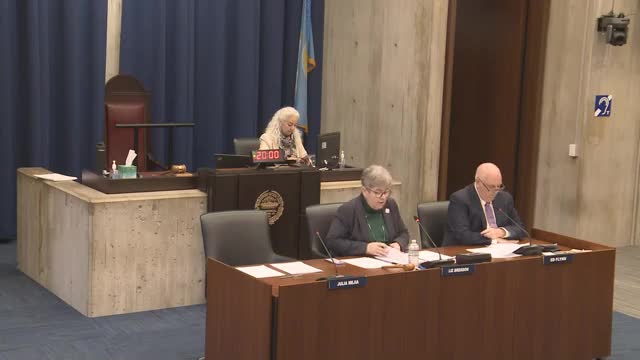
Summary
At an Oct. 16 Boston City Council hearing, BHA Administrator Kenzie Bach detailed modernization contracts and operational changes after a HUD Inspector General report, while residents and disability advocates said outages, delayed repairs and rodents continue to threaten safety and access at Ruth Barclay Apartments.
City councilors, residents and the administrator of the Boston Housing Authority (BHA) confronted continuing elevator failures, accessibility breaks and other quality-of-life problems at the Ruth Barclay public housing development during a hearing of the Boston City Council Committee on Housing and Community Development on Oct. 16.
BHA Administrator Kenzie Bach told the committee that the authority has executed contracts to modernize multiple elevators at Ruth Barclay and elsewhere in its portfolio, and that it has reduced a backlog of maintenance work orders dramatically since late 2024. Bach said the authority is using a mix of capital and operating funds, including city council appropriations, to accelerate elevator modernizations and other capital projects.
Why it matters: Ruth Barclay is home to many seniors and residents with mobility needs; repeated elevator outages there have left some residents unable to reach medical appointments, carry groceries, or return to their apartments in a timely manner. Council sponsors and disability advocates said the disruptions amount to civil-rights and public-safety concerns that demand immediate, enforceable steps, not only longer-term capital planning.
Bach told the committee that BHA manages 106 elevators across its portfolio and that it has taken several operational steps since the data period reviewed by the HUD Office of Inspector General (OIG). She said the HUD OIG report released in February 2025 drew on inspection data from 2022–23 and that BHA has been addressing the problems since late 2023, when Bach joined the authority. Bach said BHA has split elevator funding between ongoing maintenance and HUD capital allocations and recently completed upgrades at several sites. "We finally have the contract executed for the full modernization of those elevators," Bach said of the tall elevator stacks at Ruth Barclay, and she noted a "notice to proceed" meeting with the contractor took place the day before the hearing.
Bach described short-term protocols BHA uses when elevators are out of service: increased daily inspections, a digital (paperless) work-order system that routes tasks to technicians' phones, offers of temporary hotel stays or approved transfers when outages are expected to exceed 48 hours, and paid on-site aides when needed. She said open work orders fell from 17,059 on 10/11/2024 to 655 when BHA pulled data two days before the hearing, and that only 12% of outstanding work orders were more than 30 days old.
Residents and advocates said those changes have not solved immediate harms. Multiple Ruth Barclay residents testified the elevators continue to fail frequently and that response times and communications are inconsistent. Kimra Minotti said repeated outages had worsened her health: "It's debilitating my health continuously," she testified. Lisandra Montez told the committee she had been confined to her apartment "for a couple months" by outages. Denise Campbell said she had been trapped and missed activities and described repeated flooding in her unit.
Disability-rights advocate Dawn Oates, who said she represents and organizes with residents, criticized the pace of repairs and paperwork related to outages, and warned of continuing civil-rights and safety risks. "This looks like...polishing a turd," Oates said of public messaging she heard; she urged the council to treat the situation as an emergency, use emergency procurement authorities to mobilize multiple vendors in parallel, and require public reporting on outages and repair timelines. Oates said she has filed Architectural Access Board complaints and a fair-housing complaint and urged the council to demand building-specific emergency evacuation and accessibility plans.
Councilor Ed Flynn, the lead sponsor of the hearing, told Administrator Bach he did not accept a "rosy" description of conditions at Ruth Barclay and requested 911 logs and other records showing emergency responses to elevator outages. Bach said BHA does not receive 911 call logs but does track elevator-down events and that she would work with her team on what the authority can provide while protecting residents' personal data.
Bach outlined work that is already underway at Ruth Barclay: designs for modernization of several tall elevator stacks completed in August; contracts awarded this month to modernize eight tall cabs beginning in late 2025 and continuing through 2026; completion of upgrades at 42 Harrison Archway; installation of fire keyholes to allow fire services to open doors without axes; and a separate $12.9 million windows and ventilation project starting with deliveries in the next few weeks and staged installations expected to take a little more than a year.
Bach also said BHA signed a portfolio-wide ongoing elevator service contract with Schindler Elevator and has used United Elevator Corp. and Motion Elevator Corp. for additional work when the site demand required more technicians. She acknowledged long lead times for proprietary elevator components and said BHA is piloting changes (including substituting American-made equipment where feasible) to reduce future supply-chain delays.
The hearing included discussion of funding and oversight. Bach said the HUD OIG audit has been closed after BHA implemented recommendations and that BHA's HUD inspection (NSPIRE) scores averaged above 90% in the most recent round — the highest marks in decades, she said. Councilors asked for more frequent, building-level reporting and for improved resident communications, including making sure residents who lack internet or smartphones are informed of outages and options for hotel stays or transfers.
What was not decided: The hearing produced no formal vote or directive. Councilors said they would follow up with BHA on outstanding documentation requests, including elevator outage reports, 911 logs (to the extent available), work-order and Zendesk complaint summaries, and the Architectural Access Board reporting BHA has provided. Several councilors urged the city to consider further investment, oversight structures and possible use of emergency procurement authority if repairs do not proceed on an accelerated timetable.
Ending: Councilors and advocates said they will continue to press BHA for more frequent public reporting, enforceable timelines and stronger short-term accommodations while modernization work proceeds. Administrator Bach pledged continued work and said she was "really, really looking forward to the day that we have all 15 elevators at that site up and running." The committee did not set a new hearing date at the session's close.