Subcommittee pauses HB 1758 after administration raises implementation concerns about surplus property provisions
Get AI-powered insights, summaries, and transcripts
Subscribe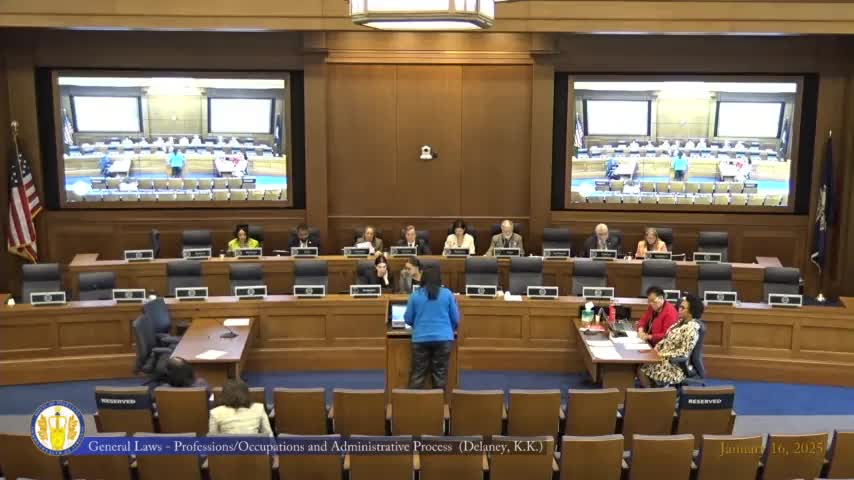
Summary
House Bill 1758, which would prioritize public surplus land for affordable housing and grant eligible organizations an exclusive 180-day window to develop properties, was passed by for the day after testimony raised technical and agency-capacity concerns from the Department of General Services.
House Bill 1758, a measure that would prioritize public surplus land for affordable housing development by giving eligible organizations a 180‑day exclusive window to acquire and develop property, was passed by for the day after the Department of General Services testified in opposition and the sponsor agreed to work with the administration on technical fixes.
Sponsor Delegate Gardner said the bill seeks to leverage publicly owned land to reduce land-acquisition costs and accelerate affordable housing development. He described the intent as publishing locality-owned surplus property lists more regularly and allowing nonprofits with housing expertise the opportunity to acquire and develop those parcels.
Charles Cualado of the Department of General Services testified in opposition, saying the bill mixes state and local surplus-property rules, would create an additional 180‑day maintenance responsibility for the department, and places duties on the department to determine whether property is suitable for affordable housing — a role DGS said it lacks capacity to perform. He also raised concerns about a 40‑year covenant provision and undefined consequences if the covenant is violated.
Committee members and the sponsor discussed working with administration staff to narrow the bill and possibly move housing-related provisions to the Department of Housing and Community Development. After that exchange, the committee voted to pass the bill by for the day (moved and seconded, voice vote recorded as unanimous).
Patrons indicated willingness to collaborate with administration and stakeholders to revise the bill.