
TennCare makes diaper benefit permanent; pharmacies to dispense up to 100 diapers/month for children under 2
Get AI-powered insights, summaries, and transcripts
Subscribe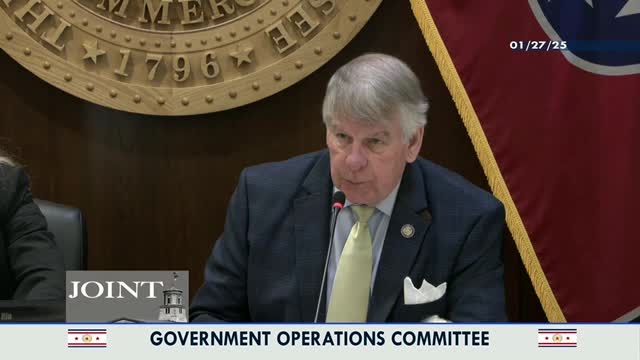
Summary
The Government Operations committee approved permanent rules implementing TennCare’s infant diaper benefit, a first‑in‑the‑nation program that provides up to 100 diapers per month for TennCare and Cover Kids members under age 2; federal approval and program launch were discussed.
TennCare laid out its new permanent rule package for an infant diaper benefit on Jan. 27, and the joint Government Operations Committee approved the rules after questions from legislators.
Ashley Reed, director of legislation for the TennCare division, said the benefit provides up to 100 diapers per month for children under age 2 enrolled in TennCare and Cover Kids; parents and caregivers can obtain diapers at participating pharmacy counters. TennCare staff said the benefit was funded in the 2023 Appropriations Act as a budget initiative using TennCare shared savings. The agency received federal approval May 17, 2024, and launched the emergency/operational program Aug. 7, 2024.
Reed told the committee 41,497 unique members (about 43% of the roughly 95,000–96,000 eligible children) had accessed the benefit in the program’s first five months. Legislators asked TennCare about safeguards to prevent price‑gouging and how the diapers would be acquired; TennCare said pharmacies may obtain product through wholesalers or retail channels and that TennCare monitors claims data and performs market scans and pricing analysis.
Senator Paul Rose moved for approval of the permanent rules; the committee carried the motion. Committee counsel recorded Senate “ayes” and the House approved by voice vote.
TennCare staff said they had prepared communications toolkits (flyers, multilingual materials and outreach for managed care organizations) and were working with pharmacies and community partners to reach rural and under‑served families.
The department said federal approval and the initial program launch had already occurred and that the permanent rules codify the operational details and procedures under state rule.