
Committee hears proposal to raise surface-mine reclamation fees; industry and small operators offer differing views
Get AI-powered insights, summaries, and transcripts
Subscribe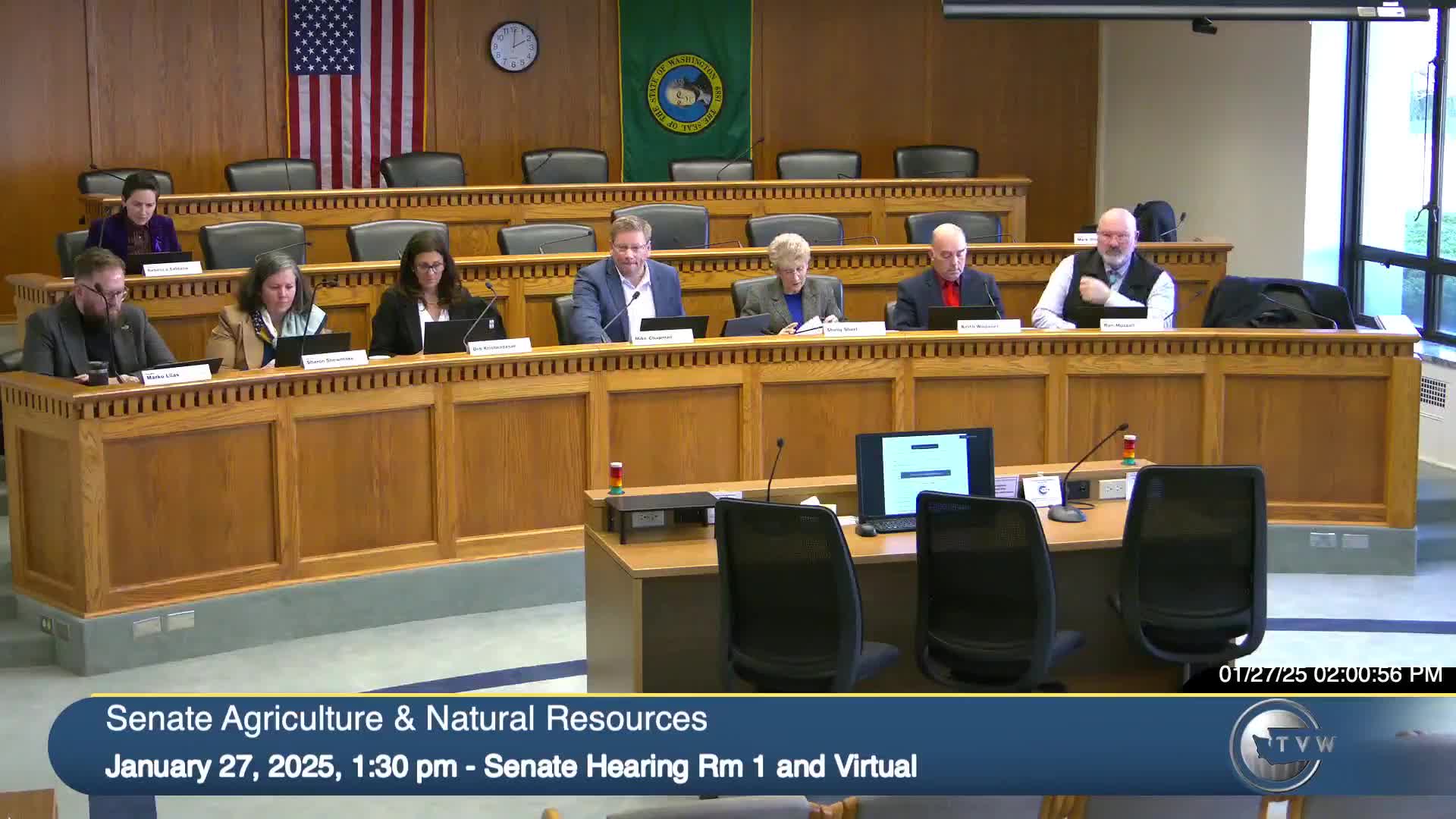
Summary
Senate Bill 5319 would raise fees that fund the Department of Natural Resources' surface mine reclamation program. DNR said fee increases are necessary to meet statutory obligations; industry groups supported the bill while a small producer warned higher fees could push rural pits out of the program.
Senate Bill 5319, a DNR-sponsored measure to increase surface mine reclamation permit and annual fees, drew both agency and industry support and concern from at least one small producer during a public hearing before the Senate Agricultural and Natural Resources Committee.
Elena Becker, committee staff, said the bill would raise two reclamation fees: the fee for revision of an existing reclamation permit or reclamation plan and an annual fee for permit holders. Committee staff summarized the bill text as raising the revision fee from $25,100 to $45,100 and the annual fee for public or private permit holders from $2,000 to $35,100, while keeping a reduced annual rate ($25,100) for public permit holders that supply mines used exclusively for public works projects. The fiscal note estimates increased cash receipts of $2,025,000 in the 2025-27 biennium.
Pat Sullivan, director for governmental and external affairs at the Department of Natural Resources, said DNR's surface mine reclamation program is fee-supported and that fees have not been raised since 2017. "In order for DNR to continue administering the program at its current level and meeting its statutory obligations, unfortunately, fees need to be increased," Sullivan said. He said the bill is the result of advisory-group deliberations over multiple meetings.
Industry groups testified in favor. Corey Shaw, executive director of the Washington Aggregate and Concrete Association, said the program enables members to tell a lifecycle story of aggregate production and urged restoration of a reclamation rewards program. "We support the bill," Shaw said.
A small, family-owned producer, Corey Hedrick of Versatile Industries, urged the committee to reconsider the fee structure because of impacts on rural, low-production pits. Hedrick said his company operates 10 pit locations to sustain a 20-person business and that the higher flat fees would amount to roughly $35,000 per year across idle and active sites. "With all 10 sources, I still only produce about 200,000 to 300,000 tons per year. I still must pay fees on all 10 pits every year totaling $35,000," Hedrick said, and he argued the change would push small rural sources out of the DNR program and increase hauling from metro areas.
Senators asked for clarification about when the fees apply; staff and witnesses explained there are separate fees for permit revisions and for annual permit-holders. Committee members did not take a vote during the hearing.