
Panel advances Hampton Roads resiliency and roads bill after substitute; funding option removed
Get AI-powered insights, summaries, and transcripts
Subscribe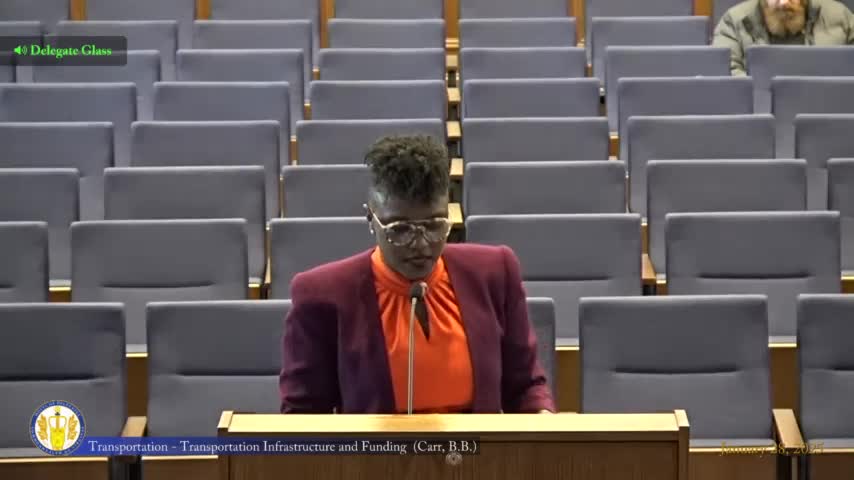
Summary
A subcommittee reported HB 2466 (substitute) 5–3. The bill would create a Hampton Roads highway coastal resiliency fund and a primary/secondary roads program; the sponsor initially proposed a 0.3‑cent local sales tax to raise an estimated $81 million but removed the tax in the substitute.
Delegate Del. Glass presented HB 2466 and a substitute that removes the proposed three‑tenths of one‑cent local tax while adding language on maintenance and creating the Hampton Roads Highway Coastal Resiliency Fund and an interstate corridor improvement program. Glass said the measure aims to address a multibillion‑dollar backlog of regional primary and secondary road needs and recurring flooding and resiliency challenges.
Bob Crum, executive director of the Hampton Roads Planning District Commission and the Hampton Roads Transportation Planning Organization (HRTPO), testified the region has identified roughly $3 billion in needs off the interstate and has nearly $6 billion in interstate projects either completed or underway. Gretchen Hill of the Hampton Roads Chamber supported the bill, citing economic harm from flooding and the need to keep truck traffic and military access moving.
Delegate Glass told members she initially proposed a 0.3‑cent tax estimate to generate about $81 million annually (roughly $48 per household) but removed the tax from the substitute and said she would continue negotiating funding options. After discussion about regional funding arrangements and how other regions split revenues, the committee voted to report the substitute, 5–3.