
Maryland farmers urge easier crop-damage permits, expanded deer management
Get AI-powered insights, summaries, and transcripts
Subscribe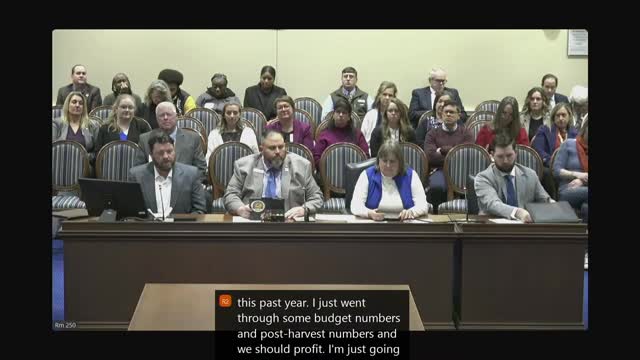
Summary
Multiple producers told the House Environment and Transportation Committee that deer damage accounts for a large share of crop losses and urged state action to simplify crop-damage permits, expand harvest opportunities and fund fencing and other mitigation measures.
Producers from across Maryland told the House Environment and Transportation Committee on Jan. 28 that deer are causing chronic, severe crop losses and that state hunting and crop-damage rules should be changed to reduce economic harm.
"On an average year...we lose between 15–20% of our crops just to deer," said a grain producer on the panel, describing how GPS yield mapping allows farmers to quantify losses. "The deer are key to profitability very much so," he later added.
Fruit-and-vegetable and specialty producers described similar frustration. A vegetable grower who uses nighttime and bow-hunting arrangements said county and state permitting is burdensome and that growers want easier, larger-scale crop-damage permits. "We need to make crop damage permits easier to get a hold of. We need to make them larger in scale," the grower said, adding that a doe-harvest challenge on the Lower Shore helped remove large numbers of antlerless deer and increased venison donations to food banks.
Panelists suggested several changes and tools: simplifying crop-damage permitting, expanding authorized harvest dates or methods (some counties are considering Sunday bow hunting), and increasing support for 8-foot deer fencing around high-value specialty crops. "One of those is deer fence, which if you're not aware is 8 foot tall fence...a lot of the fruit and vegetable producers have adopted that program," one speaker said, noting fencing allows grazing rotation and added resilience.
Delegates asked state agency partners for ideas; panelists said the Department of Natural Resources and Department of Agriculture are engaged but that practical permitting changes would ease pressures on producers. Several panelists also described on-farm donations of venison to local food banks as one immediate benefit of expanded harvest allowances.
No formal policy changes were proposed during the briefing; committee members and panelists discussed potential options for legislative or regulatory follow-up.