
Board-backed bill modernizes chiropractic licensing, discipline and education rules
Get AI-powered insights, summaries, and transcripts
Sign Up Free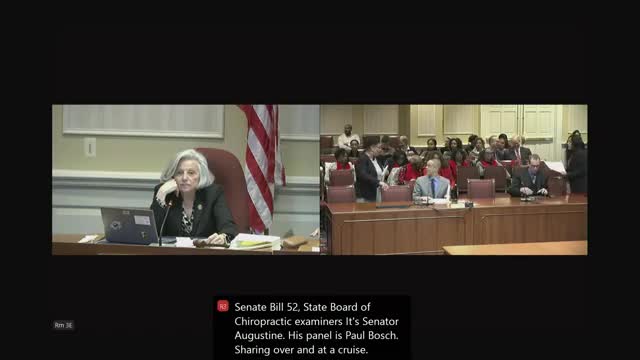
Summary
Senate Bill 52, sponsored by Sen. Malcolm Augustine, would modernize the Maryland Chiropractic Practice Act — removing outdated educational language, expanding temporary licensure, strengthening inspection and disciplinary authority and aligning acceptable accreditation standards.
Senate Bill 52, carried by Sen. Malcolm Augustine, would revise and modernize provisions governing the State Board of Chiropractic Examiners, including updates to education and licensure requirements, temporary licensure pathways, inspection authority and disciplinary grounds.
The board and professional associations testified in favor. Dr. Paul Abosch, president of the Maryland Board of Chiropractic Examiners, said the bill removes a requirement that applicants hold a bachelor’s degree prior to chiropractic licensure and expands acceptance of programs accredited by the Council on Chiropractic Education — changes that align Maryland with neighboring jurisdictions. “To remain competitive and attract qualified chiropractors into the Maryland workforce … it’s imperative that the state board of chiropractic examiners eliminate or reduce barriers to entry,” Abosch said.
The bill would also authorize the board to inspect chiropractic offices after receiving a signed complaint alleging potential violations of CDC standard precautions, authorize mental and physical examinations of applicants when public protection concerns arise, and expand acceptable methods of education delivery for continuing education and preceptorships.
Supporters — including the Maryland Chiropractic Association — said they had negotiated amendments with the board and sought a favorable report. No opposition testimony was recorded in the hearing.
Ending: Sponsors and the board asked the committee to report the bill favorably with negotiated amendments.