
Public testimony urges return of military-leased lands; committee defers bill to allow further work
Get AI-powered insights, summaries, and transcripts
Subscribe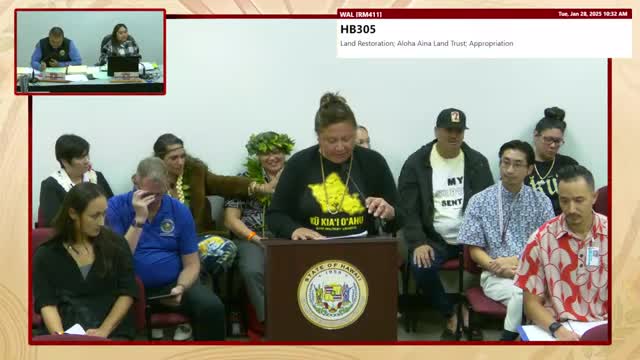
Summary
Dozens of kupuna, community groups and organizations urged lawmakers on Jan. 28 to move forward with House Bill 305, a proposal to receive, remediate and transfer lands currently leased to the U.S. military back to Hawaiian beneficiaries or an Aloha Aina trust once leases expire.
House Bill 305, which would create a trust and process for receiving returned military-leased lands and prioritizing Kuleana owners and native governance structures, drew extended public testimony on Jan. 28 from kupuna, community organizations and advocacy groups urging passage. Supporters framed the bill as a necessary mechanism for land rehabilitation and community stewardship once military leases begin to expire (scheduled in 2029 in testimony).
Several speakers described historical displacement and urged state action to ensure lands are remediated and returned to people with ancestral ties. Kalahui Hawaii testified in strong support and asked the committee to adopt a return-of-lands model similar to prior precedent (Kaho'olawe restoration). “We respectfully and strongly urge this committee to pass HB 305,” a Kalahui Hawaii representative said, citing the need for remediation funded by the U.S. military and a trusted holding mechanism for lands that may be relinquished by the Department of Defense.
DLNR opposed the bill as drafted, asking that the lease-renewal and environmental-review processes play out before the legislature prescribes a single ownership model. DLNR argued some lands are already undergoing EIS, CDUP (conservation district use permit) and other processes that require public engagement and that automatic transfer to a particular trust could short-circuit those reviews.
Committee members heard substantial community support but also DLNR’s call to let formal administrative and environmental processes proceed; the chair said the bill needs additional drafting to address DLNR’s concerns and that the introducer would provide another draft. The committee deferred House Bill 305 to allow additional work and coordination with DLNR and stakeholders.