
Committee returns 34‑acre parcel near Zoo Parkway to industrial heavy zoning to match land‑use designation
Get AI-powered insights, summaries, and transcripts
Subscribe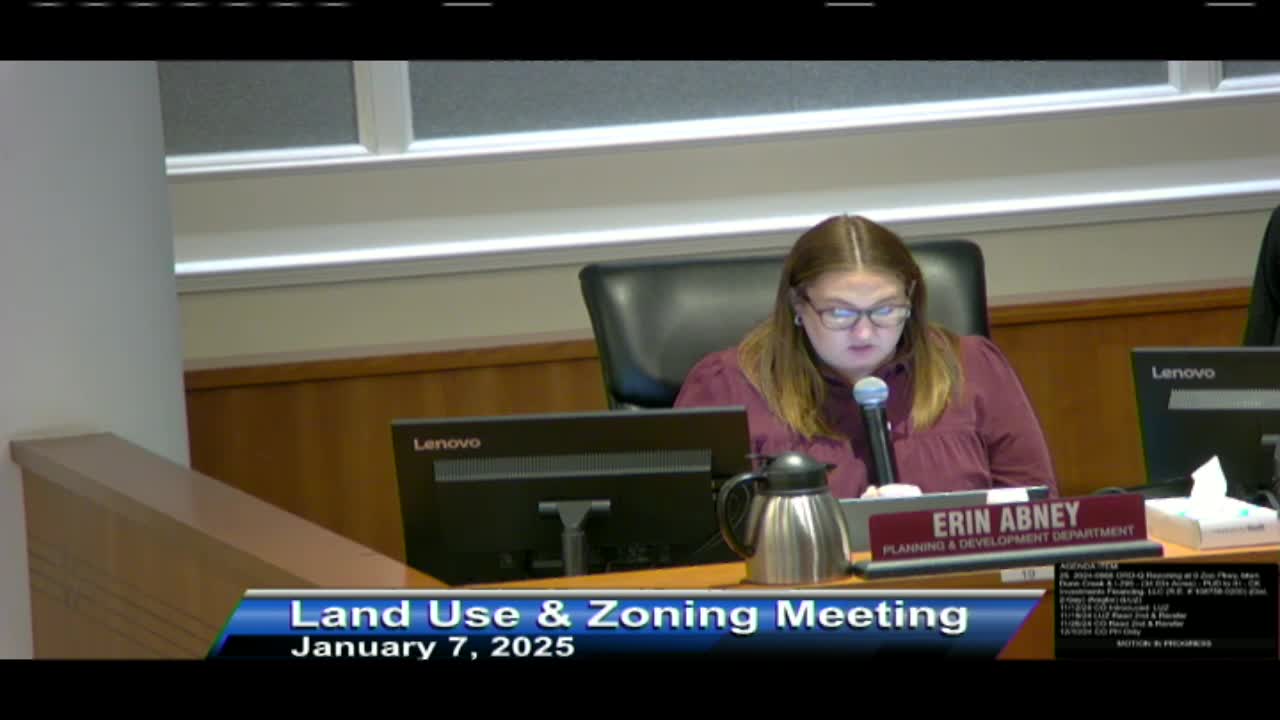
Summary
The committee approved a conventional rezoning returning a 34‑acre site along Zoo Parkway to industrial heavy, matching the existing heavy‑industrial future‑land‑use category and the Industrial Sanctuary overlay. The applicant said the change aligns zoning with historical use and proximity to major transportation networks.
The Land Use and Zoning Committee voted unanimously on Jan. 7 to rezone a 34‑acre parcel north of Zoo Parkway from a PUD back to Industrial Heavy (IH), a change the Planning Department characterized as aligning the zoning with the site’s existing heavy‑industrial future‑land‑use designation.
Planning staff told the committee the site is in a part of the city designed to support heavy industrial uses that rely on transportation networks — highways, rail and proximity to port facilities — and that surrounding parcels are similarly zoned for industrial heavy or industrial water uses. The site connects to Zoo Parkway, which links to Interstate 295 and Interstate 95.
Applicant Michael Sitner, representing the owner, urged approval and noted the property falls within the city’s Industrial Sanctuary overlay, which encourages job‑creating heavy‑industrial development and open storage uses. Planning staff and the Planning Commission recommended approval; there were no speakers in opposition during the committee hearing.
Why it matters: The rezoning removes a PUD that formerly limited use and restores an industrial zoning classification, which could enable uses such as truck and trailer storage, distribution yards and other heavy‑industrial activities. The committee and staff said the change supports the city’s industrial land‑use policy and the region’s logistics economy.
Next steps: With the committee’s vote the conventional rezoning will proceed to final legislative steps per the city’s procedures. Future site‑specific proposals will still require civil review and permits for improvements and state/federal approvals where applicable.