
Senate fails to expand state auditor’s investigatory reach after contentious amendment fight
Get AI-powered insights, summaries, and transcripts
Subscribe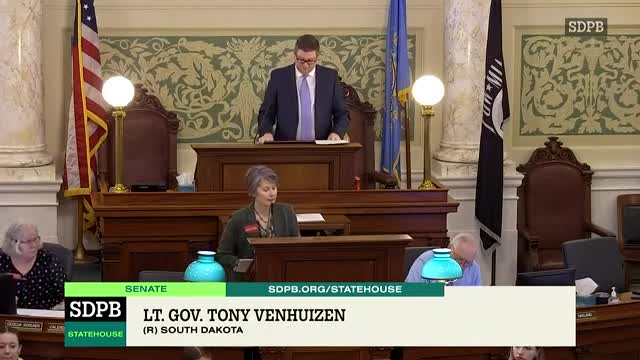
Summary
Senate Bill 60 would have given the elected state auditor broader access to agency records and required coordination between the Bureau of Finance and Management, the auditor and treasurer. An amendment narrowing investigatory language (Amendment 60D) failed, and the final bill also failed on a 16-17 vote with two excused votes.
Senator Petersen, the bill’s sponsor, asked the Senate to expand the state auditor’s access to agency records to strengthen oversight and help prevent misuse of public funds. The Senate debated an amendment (60D) that would narrow the auditor’s investigatory powers; amendment 60D failed on a roll call, and the underlying bill also failed on final passage, with the president announcing 16 yeas, 17 nays and two excused.
Petersen said the bill would allow the auditor to access agency records “for the specific purpose of conducting audits, investigating improper governmental conduct, and ensuring that effective internal controls are in place.” The sponsor told senators the change would add “independently elected eyes” to oversee fiscal policies.
Opponents and supporters sparred over the proper scope and checks on investigatory power. Senator Kolbeck and others argued the amendment was necessary to avoid concentrating broad investigatory power in an elected office that could change hands, and to avoid duplicating the work of Legislative Audit. Senators Jensen, Grove, Howard and Vojta opposed the amendment, saying the original legislation—backed in committee—better met the attorney general’s intent to allow stronger oversight.
Senator Wheeler supported the amendment as a balance that preserves oversight while avoiding duplication of Legislative Audit’s work; he argued the amendment would ensure the auditor employs qualified staff with auditing expertise. Senator Melhoff, who sponsored a separate but related bill, said the change strengthened internal controls across state agencies and described the measure as a response to recent fraud cases.
A roll-call vote defeated Amendment 60D (16 yeas, 17 nays, 2 excused). After further debate the Senate voted on final passage of Senate Bill 60; the presiding officer announced the bill failed to receive a majority of members elect, with 16 yays, 17 nays and two excused. Senator Petersen registered a motion to reconsider.