
Panel Divided Over Bill Requiring States to Report Involuntary Psychiatric Commitments to NICS
Summary
House Bill 159 would add the names of people involuntarily committed as dangerous to the National Instant Criminal Background Check System (NICS); testimony split between clinicians, suicide‑prevention advocates and gun‑rights groups over privacy, due process and public safety.
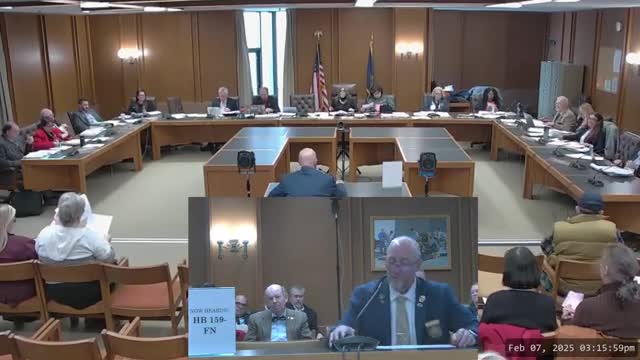
The Criminal Justice and Public Safety Committee took testimony on House Bill 159, a bill that would require New Hampshire courts or the Department of Safety to submit identifying information for people the court finds to be a danger to themselves or others and who are involuntarily committed, so the federal National Instant Criminal Background Check System (NICS) would block firearm purchases by those individuals.
Representative Terry Roy (Rockingham) sponsored the measure and said the change is intended to close a reporting gap: under current practice, New Hampshire does not routinely forward names from involuntary commitment findings to NICS, and the committee heard testimony that gaps contributed to a fatal shooting at New Hampshire Hospital where the shooter had previously been committed.
Supporters included physicians, psychiatric professional groups and suicide‑prevention advocates. Dr. John Hank, representing the New Hampshire Psychiatric Society and the Medical Society, described the measure as a public‑health step that could reduce suicides and prevent some homicides. Holly Stevens of NAMI New Hampshire testified in cautious support and emphasized that the bill applies only to those involuntarily committed after a court process (not people seeking voluntary care or simply evaluated) and that the bill includes procedural protections.
Medical testimony opposing the bill raised confidentiality and due‑process concerns. An emergency physician with decades of practice warned that sending mental‑health adjudication data to a criminal background check database is invasive and that the bill’s draft language contained internal contradictions about whether involuntary hospitalizations would be included in the exclusion for voluntary admissions. Multiple witnesses said the restoration‑of‑rights process in federal law is difficult: once a person is entered into the federal prohibited list, restoring rights is procedurally complex and, in practice, rare.
Gun‑rights organizations and private‑defense advocates strongly opposed the legislation. The New Hampshire Firearms Coalition and other witnesses argued the federal NICS system is imperfect, that thousands of denials are not followed by prosecution and enforcement is inconsistent, and that putting mental‑health data into a criminal database would further stigmatize people with mental illness and complicate employment and other civil rights.
Other witnesses urged lawmakers to focus on better mental‑health treatment and inpatient capacity rather than firearm reporting. Sponsor Roy responded that the bill includes a pathway for judicial restoration of rights if a person can show they are no longer dangerous, and he said the measure is narrowly targeted at individuals who have been involuntarily committed after a due‑process hearing.
Committee members asked technical and constitutional questions; the committee did not immediately move the bill to a vote. Lawmakers asked staff to review federal reporting rules and practical restoration pathways, and multiple witnesses offered to provide additional written materials.