
Bill would exempt legitimate trade tools from "dangerous weapon" definition, sponsor says
Get AI-powered insights, summaries, and transcripts
Subscribe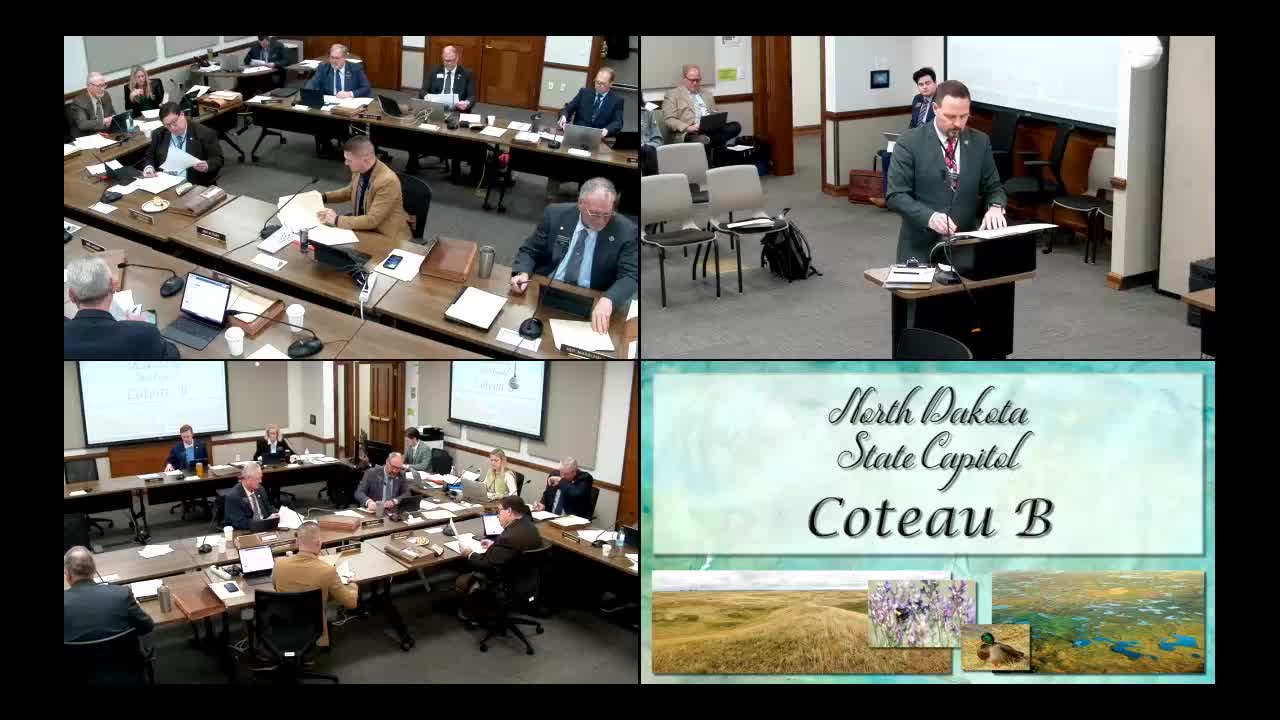
Summary
Representative Koppelman’s House Bill 1350 would clarify that tools used in a trade or profession — like knives for caterers or hammers for contractors — are not "dangerous weapons" when used for legitimate, registered business purposes, a sponsor told the committee.
Representative Koppelman presented House Bill 1350 to the House Energy and Natural Resources Committee as an effort to prevent ordinary trade tools from being treated as dangerous weapons when used in the course of legitimate work.
"What this bill is seeking to do is ensure that... your tools of your trade are not to be confused with being considered dangerous weapons as long as they're for a legitimate purpose," Koppelman said during the hearing, noting his draft adds the words "legitimate or registered" to qualify a business, trade or profession. He used examples such as carpenters, plumbers and caterers who bring knives or other tools onto public or government property to do their jobs.
Committee members questioned how the bill would interact with federal requirements at places such as airports and with local institutions that post separate rules for events or contractors. Koppelman said federal installations are exempt and that schools or other facilities could post and advertise restrictions for events or vendors when they choose.
The North Dakota Peace Officers Association submitted opposition testimony through Calvin Benson, who asked how officers would determine whether a weapon-like item is present for a legitimate business purpose. Benson said the association respectfully recommended a "do not pass" recommendation, citing broad enforcement concerns.
Koppelman said the bill is intended as a narrow clarification and that he is open to language adjustments to ensure the measure protects legitimate uses without unintended consequences.
Ending: The committee closed the hearing after receiving support, questions from members and the NDPoA's opposition testimony; no committee vote on HB 1350 is recorded in the transcript.