
Refugees testify on resettlement challenges, urge licensing and integration support
Get AI-powered insights, summaries, and transcripts
Subscribe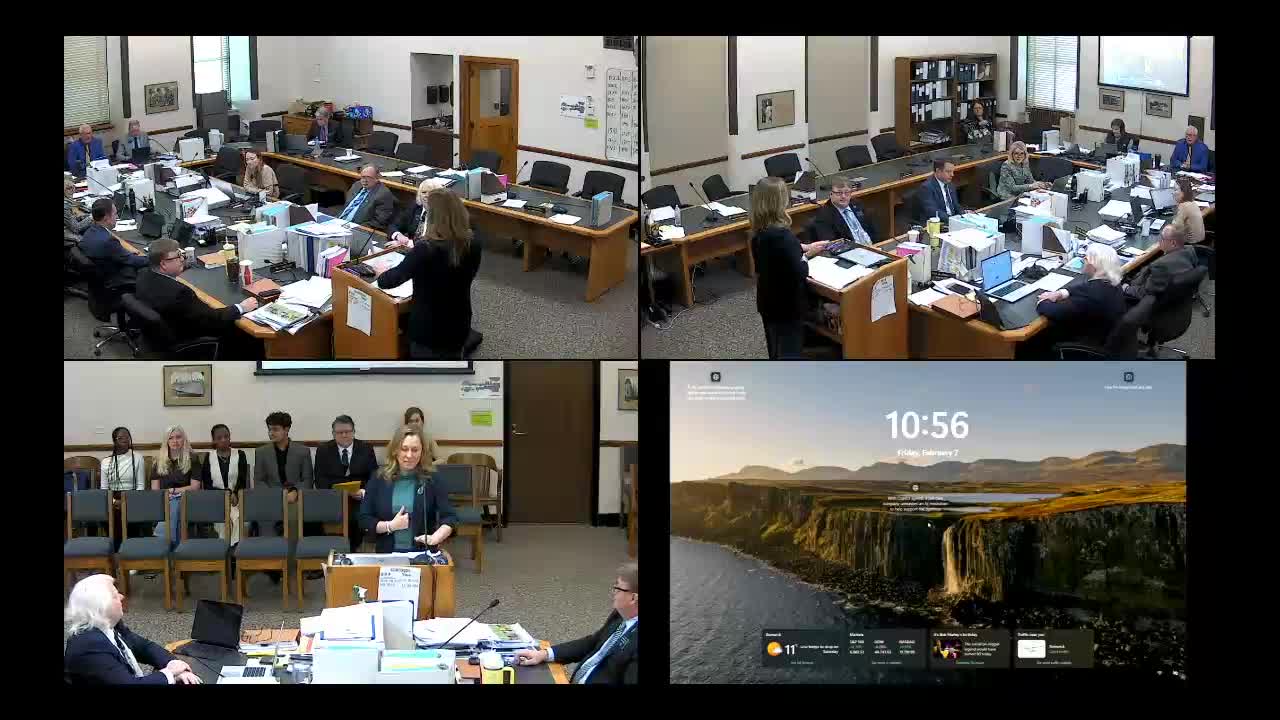
Summary
Refugee coordinator Holly Trisca Dolly and four resettled residents told the Appropriations — Human Resources Division about housing, licensing, employment and credit barriers and volunteered to participate in legislation on international physicians and workforce support.
Holly Trisca Dolly, North Dakota’s state refugee coordinator, brought four recently resettled residents to the House Appropriations Committee’s Human Resources Division to share personal accounts of arriving and rebuilding lives in North Dakota.
"These are all individuals that went through The US Refugee Admissions Program," Holly Trisca Dolly said, explaining the witnesses had undergone months of screening and obtained legal refugee status prior to resettlement. The panel heard testimony from Donald Moncada, a physician from Nicaragua now working as a certified nursing assistant and health navigator; his son Samuel Moncada; Natalia Ostapchak, a long-time Bismarck resident who described home-buying and family hardships; and Joy Quicero, an integration specialist and emergency-room nurse.
The witnesses described barriers that affect workforce integration and community stability: licensing recognition for foreign-trained professionals, lack of credit history and difficulty accessing loans, language and transportation challenges, and the need for hands-on mentoring and local sponsorship. Representative O'Brien flagged a pending Senate measure and invited one witness to testify on it: "We have a senate bill. It is 2270, and that's relating to international physicians," O'Brien said, and invited Dr. Moncada to provide testimony at the bill's next hearing.
Donald Moncada described the professional transition after resettlement. "Bismarck is now our home," he said. He told the committee he trained and worked in his country’s Ministry of Health and, after five years in Costa Rica, resettled in Bismarck with his family. He obtained a certified nursing assistant certificate, works at Bismarck Global Neighbors as a health navigator and said he aims to pursue a master's in public health to improve access to care.
Nineteen‑year‑old Samuel Moncada described cultural adaptation and early work experience: "Truly in America, everything is possible," he said, and recounted learning English on the job at Starbucks and seeking economic opportunities.
Natalia Ostapchak recounted the difficulty of obtaining a mortgage without U.S. credit history and described a long process that included multiple bank refusals and reliance on a community loan program to buy a home. She urged the committee to "believe in us," adding, "Refugees are cake, are cherry on top. We bring a new culture..." (testimony excerpt).
Joy Quicero, who works as an integration specialist, described the practical help that resettled families need: over-explaining processes, step-by-step support for forms and appointments, transportation help, and mentors to introduce newcomers to everyday tasks. She said many refugees downplay prior professional credentials because of a belief their foreign qualifications are “useless” in the United States.
Members praised the witnesses’ resilience and suggested practical follow-up. Representative Murphy and Representative Nelson encouraged witnesses interested in medical careers to engage with state programs and medical-school contacts; Representative Nelson said staff would share contact information with higher‑education and health‑system representatives. Committee members also noted the role of local nonprofits, mentoring programs and job‑service offices in helping new residents obtain certifications and employment.
Holly Trisca Dolly closed by asking the committee to remember the stories when considering refugee‑related programs and funding. Committee members said the testimony was useful and suggested more such panels could be scheduled during the session.
Votes or formal actions were not taken on policy measures during the testimony; one bill (Senate Bill 2270, relating to international physicians) was mentioned and a witness was invited to testify before that bill's hearing.