
Senate committee advances $500,000 grant program to help Oklahomans control feral swine
Get AI-powered insights, summaries, and transcripts
Subscribe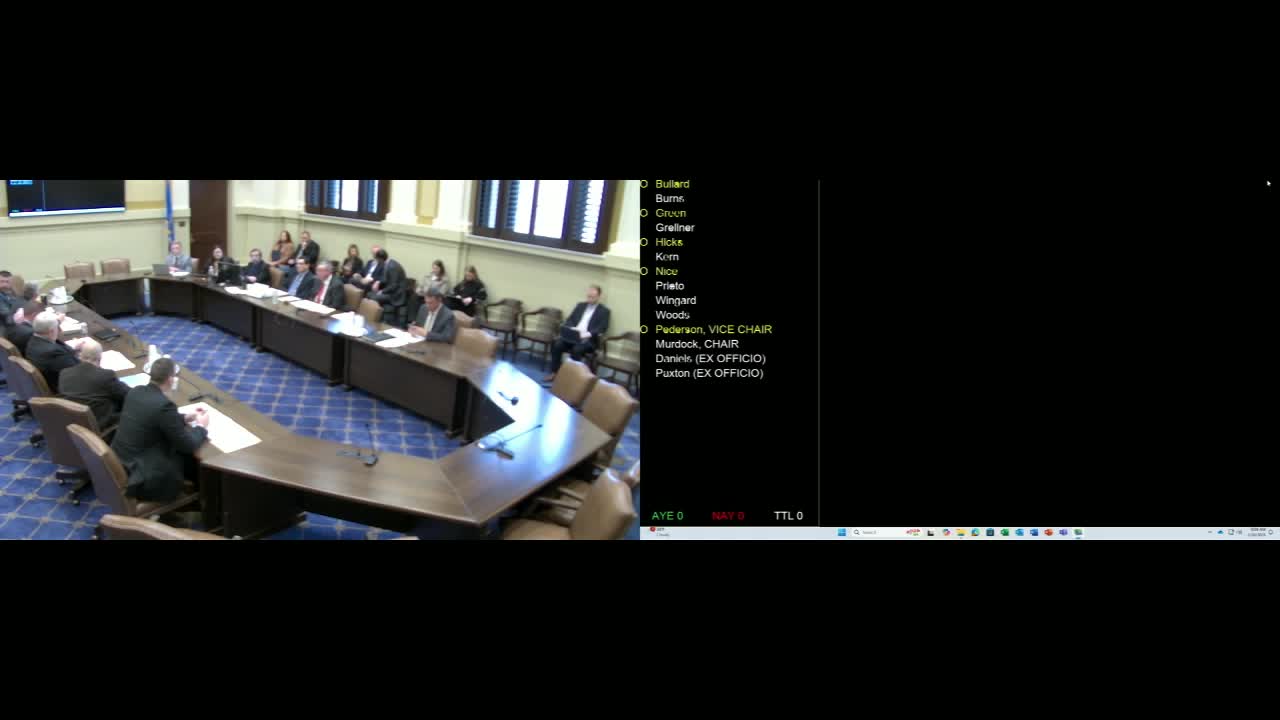
Summary
The Senate Agriculture Committee voted to advance Senate Bill 280, which would create a state grant program to fund equipment, education and services for feral swine eradication; sponsor said the $500,000 ask is intended to leverage larger federal farm‑bill funds.
Senate Bill 280, which would create a Feral Swine Eradication and Control Grant Program, advanced out of the Oklahoma Senate Agriculture Committee after a 7‑2 vote.
The bill’s sponsor told the committee the program’s purpose is “to provide Oklahomans with education, equipment and services associated with the eradication and control of feral swine in Oklahoma.” The sponsor asked the committee to “do pass,” saying the bill includes an initial $500,000 appropriation “to get the program up off the ground.”
The nut graf: supporters said the state money is intended partly to show legislative priority and to help Oklahoma secure additional federal funding through the next farm bill. The sponsor referenced the state’s prior receipts from the 2018 farm bill (about $6,000,000) and said the 2023 farm bill could include as much as $125,000,000 nationally for similar efforts.
Committee members asked for detail on how grant dollars would be used. One senator asked whether equipment purchases could include firearms; the sponsor replied the equipment piece would primarily fund traps that could be leased through conservation districts or NRCS offices. The sponsor added education efforts could work “in conjunction with like your F.F.A. programs” and public schools to teach construction or use of traps, and that contractors could be engaged as service providers to help eradicate feral hogs statewide.
Members pressed on cost control. One committee member warned eradication could become very expensive and urged caps or limits; the sponsor described the program as both a demonstration of state commitment and a vehicle for pursuing federal funds. The sponsor estimated an individual trap might cost “upwards of $500,” and said the $500,000 request was a starting point to acquire multiple traps and to leverage federal support.
On a roll call, the committee recorded 7 ayes and 2 nays and the chair declared the bill to advance.
The bill will move to the next stage of legislative consideration; no effective date was specified in committee.