
Committee clears bill to enable captive rearing and local sale of certain fish with protections for wild stocks
Get AI-powered insights, summaries, and transcripts
Subscribe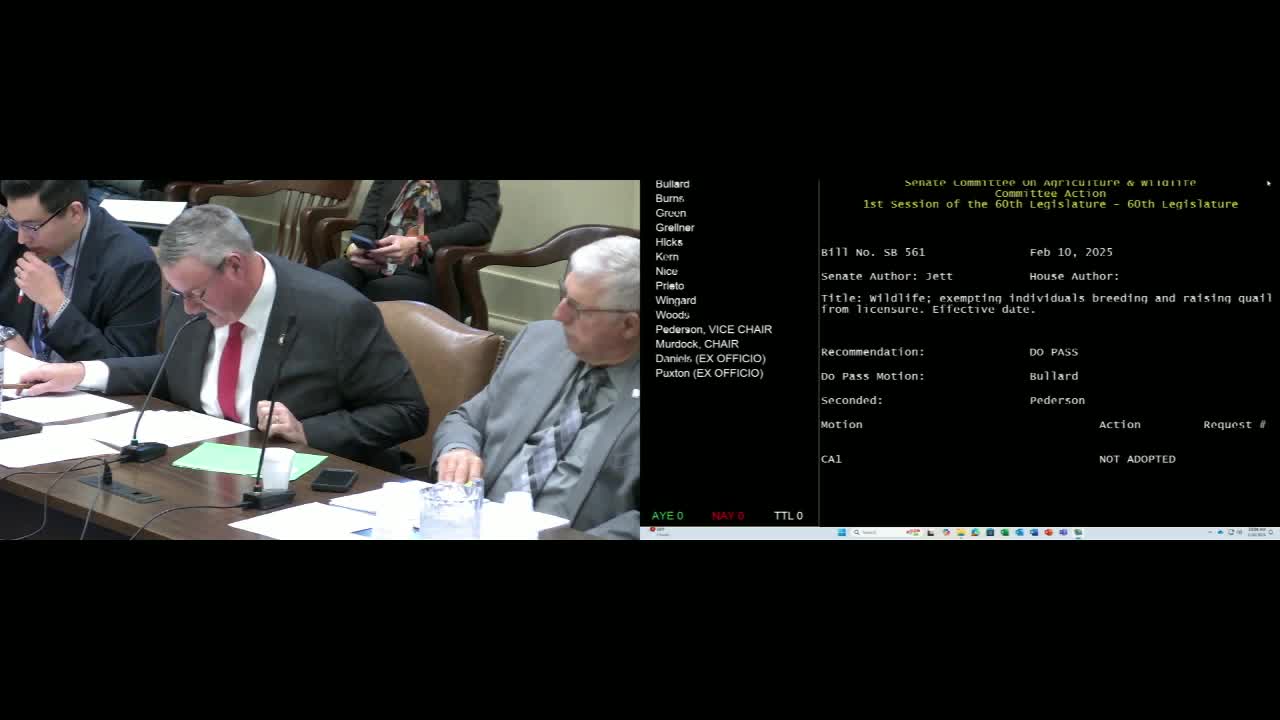
Summary
Senate Bill 777, stripped of its title for language work, passed the committee after sponsors said it will allow regulated captive rearing (tank/recirculating systems) of paddlefish and selected species while protecting broodstock limits and wild populations.
Senate Bill 777 passed the Agriculture Committee after sponsors and agency staff described the measure as an effort to create new aquaculture and farm‑to‑table opportunities while protecting wild broodstock.
The sponsor said the bill is intended to stimulate a rural cottage industry for growing paddlefish and other species in captivity, to preserve wild paddlefish populations and to create jobs in rural Oklahoma. The bill’s title was stricken on the floor and sponsors said they will refine language to protect source stocks and to specify broodstock taking limits.
The nut graf: agency fisheries staff said previous statutes limited such operations and the bill would update law to allow indoor rearing using modern recirculating systems. Richard Snow, assistant chief of fisheries with the Oklahoma Department of Wildlife, told the committee early drafts would be rewritten to ensure any broodstock removal from reservoirs stays within department krill limits already set by the agency and that progeny would be reared in captivity for sale.
Committee members asked whether the bill would affect shad species used as live bait for guided fishing trips on Lake Texoma. Agency staff said common bait shad species are prolific and that indoor producers could also supply bait if needed; staff also said the bill could be written to avoid impacts to existing bait or commercial fisheries.
After questions and assurances from the sponsor and agency officials, the committee voted 9‑2 to pass the bill to the next stage; the committee record shows the chair declared the bill passed.