
Committee expands Terry Peach watershed pilot to additional lakes to study cedar removal’s water benefits
Get AI-powered insights, summaries, and transcripts
Subscribe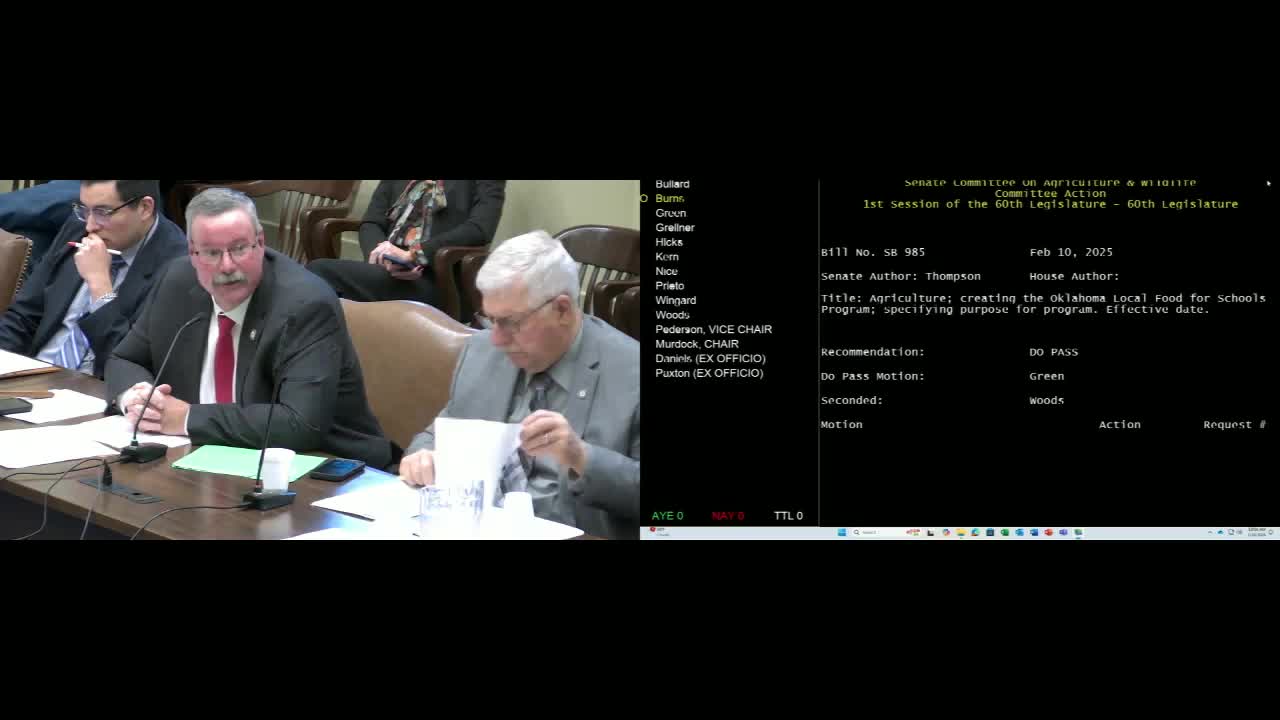
Summary
Senate Bill 263, the Terry Peach Water Restoration Act, passed the committee; the measure would expand an existing pilot that targets invasive red cedar removal to additional reservoirs and study effects on streamflow and water resources.
Senate Bill 263, presented to the Senate Agriculture Committee as the Terry Peach Water Restoration Act, passed on a unanimous committee vote after members described the program and its pilot approach.
Sponsor Senator Murdock said the original Terry Peach effort focused on Canton Lake and removal of encroaching eastern red cedar; the bill would expand the research and restoration pilot north of Lake Hefner and north of Lake Overholser to gauge impacts on surface‑water supplies. The sponsor noted that red cedar trees can use “40 gallons of water per day per tree” and said removing them could increase streamflow into reservoirs.
The nut graf: conservation commission staff described current operations in the pilot area: contractors and cedar technicians remove cedars, crews conduct prescribed burns and money is provided to landowners for cost‑share to complete burns. The commission official said the program combines direct removal, prescribed fire and landowner cost share to restore watershed function.
Committee members asked whether the program emphasizes contractor removal or equipping landowners to do the work. The conservation official said the pilot uses a mix—contractors perform removals and technicians do site work while funds and technical assistance are provided to landowners to carry out prescribed burns and other restoration practices.
Senators voiced support, noting the program’s potential to increase streamflow and improve watershed health; the committee recorded 11 ayes, 0 nays and the bill passed committee.