
Resident tells Franklin SSD board his child was denied comprehensive IEP evaluation
Get AI-powered insights, summaries, and transcripts
Subscribe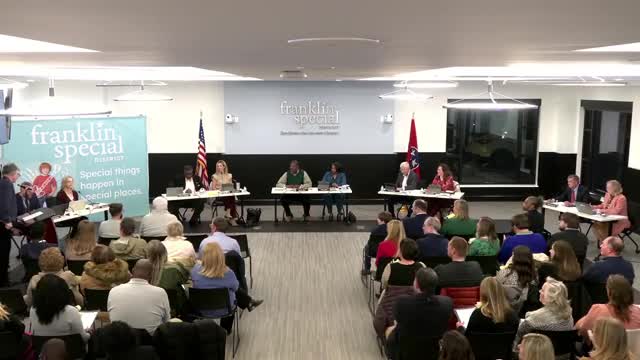
Summary
A resident in public comment told the Franklin Special School District board that his daughter has a documented learning disability but was denied a full IEP evaluation; he asked the board to review district policy against federal and state requirements.
A resident identified in the meeting as Hunter told the Franklin Special School District Board of Education that his daughter, a student in the district, has been denied a comprehensive special-education evaluation despite documented learning disabilities and court orders.
Hunter said the district has provided piecemeal interventions but not the comprehensive evaluation he believes federal and state law require. “The state and federal statutes require that upon the allegation of a learning disability, a child is entitled to a comprehensive evaluation, not a limited evaluation and a piecemeal intervention,” he told the board during the public-input portion of the meeting. He said the district denied the evaluation because he is not a full-time parent and lives outside the district, and because the child’s mother disagrees.
Hunter said he has presented multiple court orders to district administration but that the district has declined to provide the evaluation. Board members did not announce a follow-up action during public comment; the chair thanked him for speaking and closed the public-input period.
Why it matters: Parents’ requests for special-education evaluations trigger procedural protections under federal and state special-education law. Public commenters raising claims of denial typically ask boards to confirm whether district policies and procedures were followed and, where appropriate, to direct staff to review compliance or provide records.
The meeting record does not show the board taking immediate formal action in response to Hunter’s statement; no district response beyond acknowledgment was recorded during public comment. The board’s formal agenda later addressed other items including personnel tenure recommendations, property surplus authorization, tuition rates and policy readings.