
Gardner Middle and Elementary describe school improvement plans focused on Tier 1 instruction, SEL and family engagement
Get AI-powered insights, summaries, and transcripts
Subscribe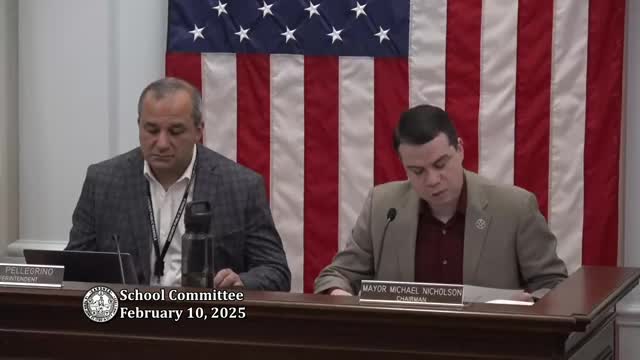
Summary
Principals presented draft school improvement plans at the Feb. 10 Gardner School Committee meeting, emphasizing Tier 1 instructional fidelity, literacy, SEL and family engagement.
At the Gardner School Committee meeting on Feb. 10, principals from Gardner Middle School and Gardner Elementary presented draft school improvement plans that align with district priorities around high‑quality Tier 1 instruction, social‑emotional learning and family engagement.
Becky Earl, who presented the Gardner Middle School plan, said the school's goals flow from the district priority to implement Tier 1 lessons using high‑quality instructional materials with fidelity. "Currently, we have 3 of our 4 core areas [with] high quality instructional materials," Earl said, and reported that ELA was added this year using the Amplify curriculum. Earl described behavioral and SEL goals tied to MTSS and PBIS, said the middle school recently implemented school‑wide expectations and routines, and said the school is evaluating its advisory SEL curriculum.
Earl emphasized literacy and attendance as priority outcomes. She said the middle school did not see the same chronic absenteeism improvements reported elsewhere in the district and identified improving attendance as an intended outcome from academic, social‑emotional and family partnership work.
An elementary school presenter (not named in the transcript) described aligned objectives at Gardner Elementary: the same focus on Tier 1 instruction, fidelity checks of classroom practice, specific literacy interventions (the district uses a Foundations program for early literacy and a data tool called Open Architects), and family engagement initiatives such as book nights, decodable texts and a PBIS book‑vending machine supported by a Rockwell grant.
Both building presenters described specific targets: shrinking the percentage of students below grade‑level literacy (the presenter set an objective to reduce the “red” category to 15%), improving teacher implementation fidelity through targeted professional development, and reducing the share of students requiring Tier 3 interventions (noting the district target range of 1–5% versus a prior 28% level in one metric).
Committee members asked questions about family reading at home and district supports. One member identified as Mr. Martin asked whether reading gaps were caused by lack of reading at home; presenters said the district is promoting home reading through software and a Read Across America campaign and emphasized focusing on instruction the district can control.
The school improvement plans were presented as draft documents for committee review; committee action on the plans was not taken at the Feb. 10 meeting.