
Westminster staff outline Parks, Recreation and Libraries vision plan after months of public engagement
Get AI-powered insights, summaries, and transcripts
Subscribe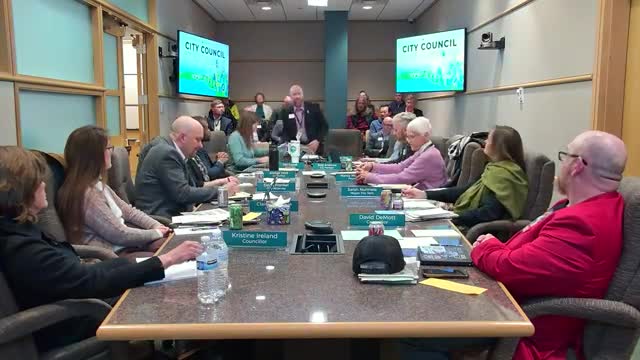
Summary
Eric Otzelberger, Acting Director of Parks, Recreation and Libraries, presented the City of Westminster’s draft PRL vision plan on Jan. 6 after a public engagement process Otzelberger said reached more than 3,500 people; the draft lists 125 recommended actions and frames a district‑based approach to maintenance while noting large capital costs for new facilities.
Eric Otzelberger, Acting Director of Parks, Recreation and Libraries, presented the City of Westminster’s draft Parks, Recreation and Libraries (PRL) vision plan at the Jan. 6 city council study session. The presentation summarized results from a public engagement effort that Otzelberger said reached more than 3,500 community members and stakeholders and introduced a set of 125 recommended actions intended to guide the department’s work over the next decade.
The plan collects asset inventories, market analysis, demographic trends and community feedback and is meant to inform city budget and capital improvement decisions. Otzelberger and consultants outlined recommended goals, potential district-based maintenance hubs, facility priorities and rough cost ranges for new major projects.
Why it matters: Westminster’s PRL department manages a large share of city land and services — the presentation noted 63 parks, seven recreation centers, about 126 miles of off‑road trails and roughly 3,817 acres of open space. The plan’s actions will guide resource allocations, maintenance priorities and potential new facilities as the city balances maintenance of existing assets with limited capital budgets.
Otzelberger said the plan grew from a 2023 strategic-plan directive and the city’s last comprehensive parks plan in 2009. He said the draft includes 125 discrete actions and appendices with operational detail that staff expect will be used to inform budget and capital project proposals. “This is a massively significant effort with the draft PRL vision plan,” Otzelberger said during his presentation.
Key findings and figures from the presentation included: - Accessibility and levels of service: city libraries are within a 15‑minute drive for residents, rec centers about 12 minutes, and the city is close to a 10‑minute walk standard for neighborhood parks in many areas. The department reported about 2,337 acres of parks (approximately 20 acres per 1,000 residents) and roughly 3,818 acres of open space (around 33 acres per 1,000 residents). - Revenue and cost context: PRL’s five‑year average revenue recovery was presented at 35 percent, described as roughly 13 percentage points higher than the National Recreation and Park Association average, and placing Westminster in an upper quartile for comparable agencies. Otzelberger said the city’s current capital budget for PRL is in the $6–8 million per year range. - Order‑of‑magnitude costs for potential new facilities given in the plan: a new neighborhood park at Westminster standards roughly $8–10 million; an outdoor aquatic center $30–37 million; a new recreation center $75–85 million.
Council members focused questions on: how the plan’s proposed maintenance districts would be measured and used for performance management; whether the department can analyze whether program users reflect citywide demographics; how partnerships (including nearby Broomfield) might be used to expand access rather than build new large facilities; and how the department would prioritize the 125 action items into near‑term budget proposals.
On performance metrics and equity, Otzelberger said the department has begun asset‑management work and will pursue more operational metrics tied to districting and staffing. He told Council the PRL team could follow up with more detailed demographic and RecTrac registration analysis and would share information about an existing scholarship program that is used to avoid turning away participants who cannot pay. He also described exploratory discussions with Broomfield on a possible resident‑rebate pilot allowing some Westminster residents to use Broomfield facilities rather than the city immediately building a new northeastern recreation center; staff said an initial estimate suggested rebate program costs might be small ("I would have a hard time envisioning that usage of this rebate would exceed $10,000 in a given year," Otzelberger said) but that details required further work and partner agreement.
Operational recommendations emphasized “make the best use of what we have,” including the four‑district maintenance hub concept intended to reduce travel (“deadheading”) and increase local accountability for maintenance work. Otzelberger and staff noted ongoing irrigation and sustainability improvements intended to reduce operating costs over time.
Councilors asked for more detail on several items staff pledged to return with: geographic distribution of survey responses; whether usership for rec programs matches city demographics; scholarship program outcomes; and a prioritized set of actions to inform the February–March budget process. Otzelberger said staff will open an online review period for the draft plan during January, hold a public open house Jan. 29 (4:30–7:30 p.m. at City Park Rec Center) and expects to present the final PRL vision plan and a companion library master plan for Council consideration in March.
The presentation included consultants from Logan Simpson and PROS Consulting, and the city said the PRL vision plan will be in a final public‑comment phase through the month of January. Staff described the study session item as a request for feedback; Council did not take formal action at the meeting.
Otzelberger closed the presentation by asking for Council comment and public feedback through the end of January. Staff said they will incorporate Council direction and the remaining engagement feedback before returning to Council with recommendations for budget and capital priorities.