
Senate resumes debate on making comptroller general an appointed post; sponsors carry joint resolution over
Get AI-powered insights, summaries, and transcripts
Subscribe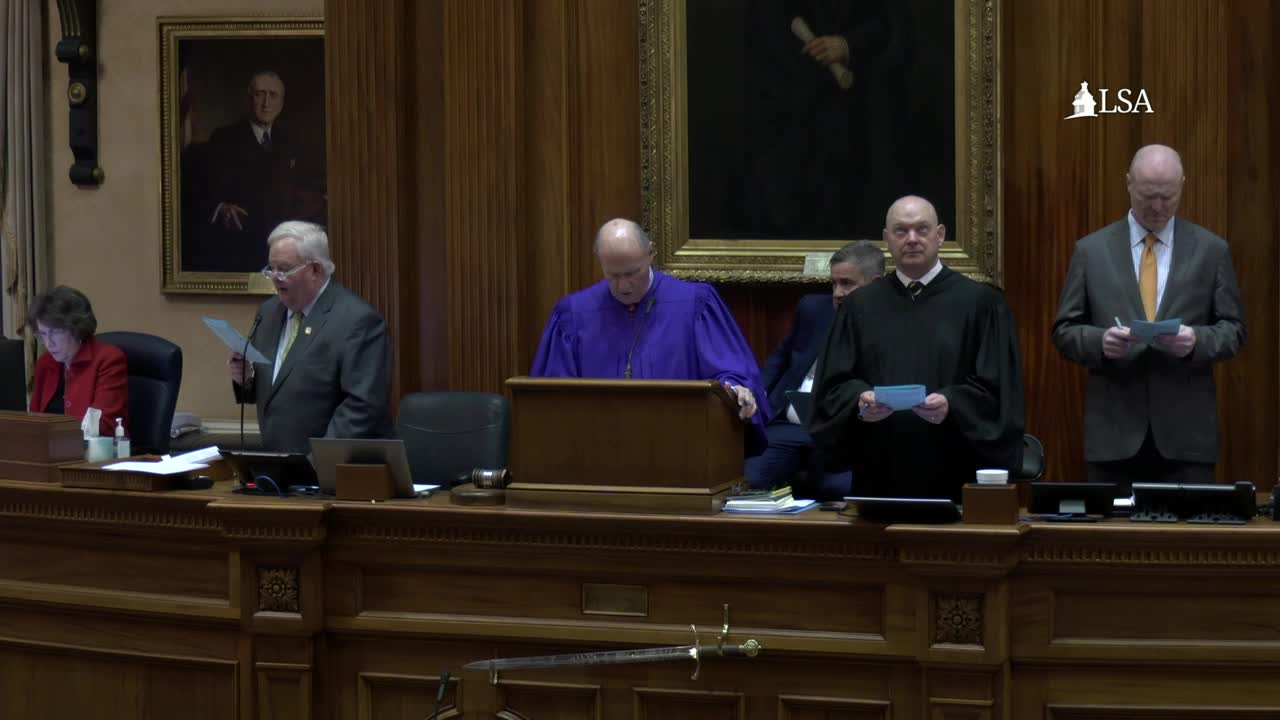
Summary
Senator Khamsin reintroduced a joint resolution to remove the Comptroller General from the list of elected constitutional officers and make it an appointed position; senators debated separation-of-powers concerns and decided to carry the measure over for further consideration.
The Senate returned to a joint resolution on Feb. 11 proposing a constitutional amendment to remove the Comptroller General as an elected officer and make the position appointed. Senator Khamsin led floor discussion and then supported a motion to carry the measure over to allow additional review.
Senator Khamsin said the resolution would "remove the controller general from an elected position to a position that is appointed," and traced the office’s history to explain the change. He described duties of the Comptroller General — preparing the state's comprehensive annual financial report, accounting for appropriations, maintaining financial information systems and serving on certain oversight boards — and argued the role is a professional financial function better suited to appointment.
Colleagues asked whether the treasurer’s office should be considered similarly; Khamsin said he was deferring to the special committee chaired by Senator Grooms, which has studied the treasurer’s office in more depth. Senator Devine and others raised the recent fiscal-accounting problems and noted an ongoing SEC inquiry; Devine said the SEC monitors how the legislature responds and that the body’s stewardship matters for that external review.
Senator Khamsin said he would not force a quick vote and would yield to the special committee’s work; Senator Grooms moved to carry the resolution over and the Senate agreed. No final popular-vote question was placed on the ballot during this session — the resolution was carried over rather than advanced to the 2/3 legislative vote and subsequent referendum step.
The transcript records extensive floor discussion about institutional checks and balances, the role of an auditor and how elected versus appointed structures affect accountability; senators also raised the possibility of asking separate questions to voters for other offices, which would require separate resolutions.