
PUCN seeks four regulatory experts, proposes mill assessment near cap to fund $37.2M biennial budget
Get AI-powered insights, summaries, and transcripts
Subscribe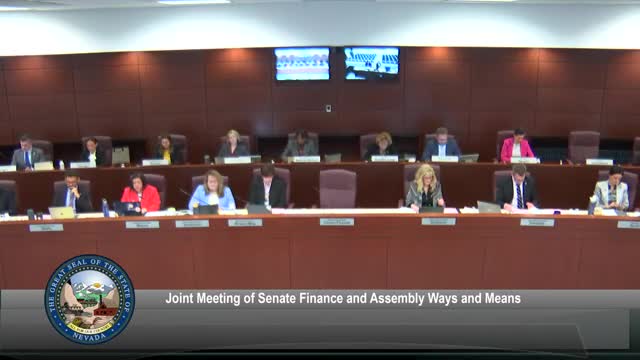
Summary
The Public Utilities Commission of Nevada asked the legislature’s money committees for a $37.2 million biennial collection funded mainly by the annual mill assessment, proposed near historical limits, and requested four technical positions to handle growing contested cases and complex filings.
The Public Utilities Commission of Nevada requested funding to collect $37.2 million over the next biennium and asked the joint Senate Finance and Assembly Ways and Means committees to approve four new regulatory positions to help the agency process more complex contested cases.
The request matters because the PUCN’s primary revenue comes from an annual mill assessment on utilities; Executive Director Stephanie Mullen told the committees the commission expects the mill rate to be set at about 3.04 mils in fiscal year 2026 and 2.82 mils in fiscal year 2027. "The mill assessment is capped at 3.5 mils for the PUCN and this cap was set in 1980," Mullen said, noting the proposed rates would amount to roughly 75–80 cents per month per ratepayer across all utility bills.
The commission said the additional staff are needed to keep up with an increase in the size and complexity of filings, transcript page counts and contested proceedings. Garrett Weir, general counsel for the PUCN, described the roles the requested hires would perform: regulatory engineer, regulatory accountant, regulatory economist and a chief attorney. He said these staff would prepare and defend technical expert testimony, respond to discovery and help ensure statutory timelines are met. "These individuals...are expert witnesses," Weir said, explaining some contested cases can require "hundreds and hundreds of hours" of work.
PUCN outlined other budget details. Personnel services for the biennium are budgeted at $35 million. Decision units include a proposed reduction (E680) eliminating several administrative positions that would reduce costs by about $796,000 and an increase (E300) of about $1.4 million to add the three technical experts and a chief attorney. The agency also proposed increases for training and travel—$289,000 and $38,000 in decision units cited to support staff attendance at national conferences and specialized training—as well as $680,000 for IT and smaller amounts for office technology and in-state travel related to pipeline and rail inspections.
Mullen explained the PUCN maintains program-specific reimbursements for pipeline safety (PHMSA may reimburse up to 50% of pipeline safety costs), the one-call damage prevention grant, rail safety fees and the universal energy charge. She said the agency targets an optimal reserve range of $4.3 million to $4.9 million (about three months of expenditures); a pending end-of-year transfer of legislatively approved funds, she said, would raise the projected reserve to about $6.1 million.
Committee members pressed for workload metrics and timeline planning. Assemblymember Hategui asked how current statutory obligations are being met; Weir said existing staff are meeting requirements but that the new hires would reduce unsustainable overtime and weekend work. Senator Veil asked what metrics drove the request; Weir pointed to rising page counts for testimony and transcripts as proxies for complexity and hearing length and reiterated contested proceedings are the primary driver.
Assemblymember Watts asked about the mill assessment mechanics and whether legislation this session could change workload and thus funding needs; Mullen said the PUCN factors prior-year utility revenues into the rate-setting calculation and relies on fiscal notes to reveal new legislative workload implications. "If we see something that would significantly increase the commission's workload I assume that would be handled through a fiscal note on the bill," Mullen said.
The committees closed the PUCN hearing after members disclosed conflicts and asked follow-up questions about recruitment timelines and staffing fill rates. Garrett Weir said the agency is currently recruiting for one regulatory economist and that most positions are filled.
The PUCN presentation covered revenue sources, reserve goals and specific decision units the agency proposes to fund, and committee members requested more detail in follow-up materials on workload metrics and expected timelines for filling specialized positions.