
Senate approves measure to require EMS training via certified centers amid debate over rural access
Get AI-powered insights, summaries, and transcripts
Subscribe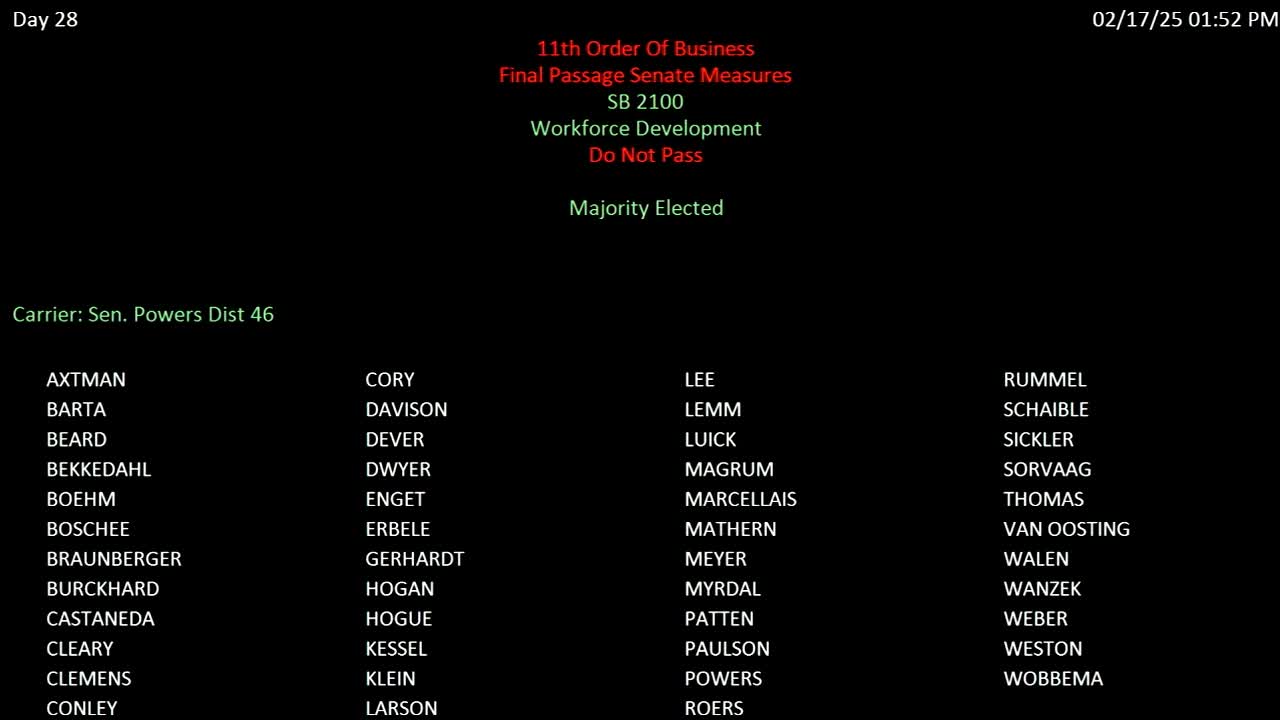
Summary
The North Dakota Senate passed Senate Bill 2,100 to require certain emergency medical services (EMS) training be affiliated with licensed EMS training centers. Supporters said the change standardizes training; opponents warned it could reduce rural volunteer training availability and increase costs.
The North Dakota Senate on Feb. 17 approved Senate Bill 2,100, a measure that requires emergency medical services instructors and some training to be affiliated with licensed EMS training centers and clarifies certification pathways for newly trained emergency medical responders. Final roll-call showed 44 ayes, 1 nay and 1 absent; the bill passed.
The bill’s committee sponsor, Senator Powers, said the Workforce Development Committee recommended a do-not-pass, citing concerns the measure would burden already stretched rural EMS providers. The committee report stated the rule changes would “add hardship on already stressed EMS services in smaller communities, increasing the cost, eliminating courses provided in rural areas, and added workload to volunteers.”
Senators who supported the bill described it as necessary to maintain consistent instructional standards and access to equipment. “They just would have to be affiliated with the training center, so they could still instruct in their local community, but the affiliation would help ensure they have all the equipment,” Senator Axman said during floor debate. Axman said some training centers planned outreach to unaffiliated instructors to reduce service loss.
Rural senators and other proponents warned the requirement could reduce local training availability and increase travel costs for volunteers. “If somebody in say Tioga wants to be certified, they’re gonna have to go to Williston to go through the training rather than have a local instructor,” Senator Beard said, arguing the rule change has a “chilling effect” on local ambulance services. Senator Angus said the nearest certified center for some districts is 80 miles away and called the extra travel a “tremendous ask” for volunteers.
Other supporters urged passage to allow later clarifications in rulemaking and to align the bill with parallel work addressing distressed ambulance services. “This is all part of the bigger picture that we’re trying to address,” Senator Lee said, urging a yes vote so fixes could be clarified later if needed.
The Senate vote followed extended floor debate and repeated assurances from some senators that local instructors could continue teaching provided they affiliate with a certified center; opponents remained concerned about cost and access for remote communities. The bill will proceed to the next steps in the legislative process.