
Lawmakers hear resolution to study human-trafficking victim services and reentry programs
Get AI-powered insights, summaries, and transcripts
Subscribe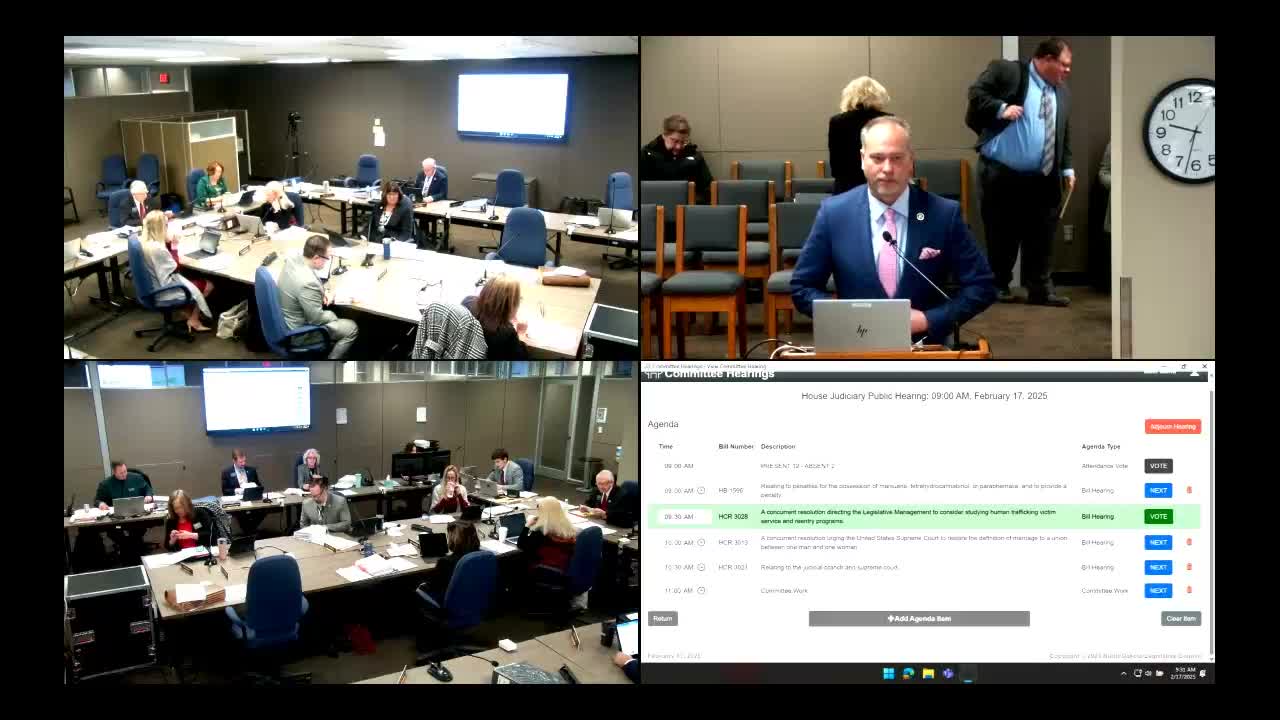
Summary
Representative Steve Vetter asked the Judiciary Committee to direct legislative management to study services and reentry supports for human-trafficking victims; advocates, service providers and a survivor described gaps in data, protection and long-term supports.
Bismarck — The House Judiciary Committee heard testimony Thursday on House Concurrent Resolution 3028, which would direct legislative management to study human-trafficking victim services and reentry programs and report findings to legislators for possible future legislation.
Representative Steve Vetter, sponsor of HCR 3028, told the committee the study would focus on two main objectives: compiling up-to-date information about services for trafficking victims and concentrating on workforce reentry and protective measures that help victims avoid being re-trafficked. "How can the state help victims of this terrible crime? The main purpose ... is for reentry and protection from the bad guys," Vetter said.
Multiple organizations testified in support. Jacob Thompson, a policy analyst for the North Dakota Family Alliance Legislative Action, and David Tamasia of the North Dakota Catholic Conference urged lawmakers to approve the study, stressing the severe mental-health consequences for victims and the importance of data to guide policy. Stacy Schaffer of 31A Project described that organization's demand-reduction program, survivor mentorship and statewide trainings, and provided program metrics: 31A has delivered trainings to hundreds of professionals and supported dozens of survivors through mentor services, reporting 62 trafficking survivors served in 2024 and growing year-over-year participation.
Advocates and service providers told the committee that human trafficking is often hidden and data are incomplete, complicating legislative and program responses. Schaffer said many survivors need long-term, wraparound services; 31A Project and other providers said funding and staffing shortages limit service capacity.
A survivor who identified herself as Leah Isaac offered detailed testimony about her experience being trafficked, the gaps she encountered while seeking help across several states, and the barriers survivors face in accessing stable housing, identity documents and long-term mental-health care. Isaac described a multi-year period of homelessness and repeated encounters with service systems that she said sometimes exposed survivors to further harm. She urged lawmakers to include people with lived experience in designing programs and to prioritize stabilized housing, anonymity protections, transportation, and long-term mental-health and legal supports.
Committee members asked how the proposed study would differ from past interim studies; Vetter said his proposal emphasizes workforce reentry and survivor protection rather than primarily focusing on enforcement and prosecution. The committee did not take a final vote on the resolution during the hearing.