
Film North seeks $400,000 to design statewide film workforce training program
Get AI-powered insights, summaries, and transcripts
Subscribe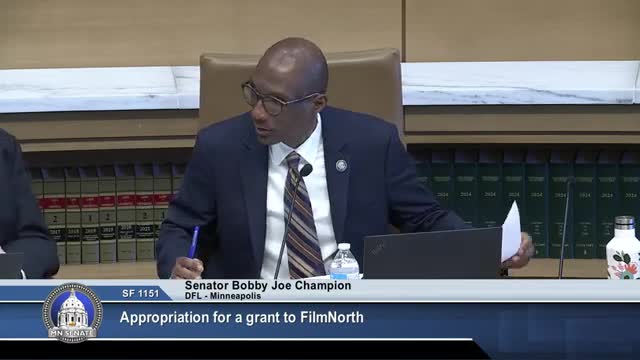
Summary
Sen. Umu Verbatim and Film North director Robert Ndondelei urged the Jobs Committee to fund a one‑time, statewide film workforce training pilot; Film North requested $400,000 for FY2026 to study and pilot a program and develop a sustainable statewide curriculum.
Sen. Umu Verbatim presented Senate File 11‑51 to the Minnesota Senate Committee on Jobs and Economic Development on Feb. 17, asking support for Film North to develop a statewide film workforce training program.
Robert Ndondelei, director of engagement and professional development at Film North, told the committee the state lacks a coordinated set of year‑round training programs for film production crew and that Explore Minnesota’s staffing and current crew directory do not provide sufficient training or placement capacity. “We are the leading filmmaker support organization in the Upper Midwest,” Ndondelei said, describing Film North’s 35‑plus year track record and existing education and production facilities.
Sen. Umu Verbatim said the program would aim to train people previously excluded from the industry and to create consistent standards across regions; it would study successful programs in other states, pilot courses and then fund a sustainable statewide program.
Fiscal staff reported Film North received $100,000 one time in FY2025 from the Workforce Development Fund and that Senate File 11‑51 requests $400,000 one‑time in FY2026 from the General Fund. Witnesses said the requested amount was based on comparable programs in mid‑sized states rather than large markets such as California or New York.
Committee members asked for more details on how the $400,000 would be spent and how many trainees could be served; Ndondelei said the $400,000 figure was based on market comparisons and that the program to date has focused on research and travel funded by the earlier $100,000. The bill was laid over for possible inclusion.