
Committee advances plan to make political contribution-refund receipts electronic
Get AI-powered insights, summaries, and transcripts
Subscribe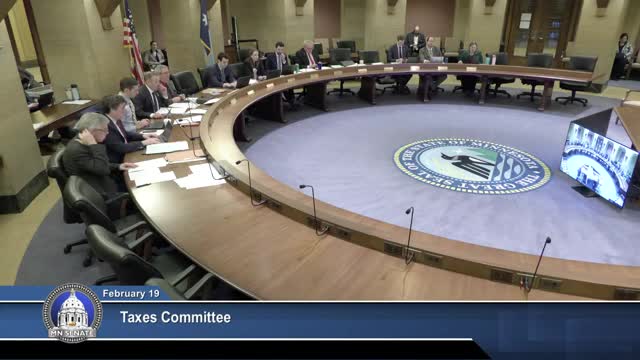
Summary
Senate File 9 would require the Campaign Finance Board to provide electronic receipt validation to the Department of Revenue so political contribution refund claims can be processed electronically; the committee laid the bill over for possible inclusion after sponsors said it will save administrative costs.
Senate File 9, presented by Chair Rest, would modernize administration of the political contribution refund by having the Campaign Finance Board collect and transmit electronic contribution-receipt validation to the Department of Revenue. The Taxes Committee heard the bill Feb. 19 and laid it over for possible inclusion in future legislation.
Chair Rest said the change would allow campaign contribution receipts to be reported electronically rather than relying on handwritten paper receipts. The bill establishes that the Campaign Finance Board will provide a receipt-validation report to the Department of Revenue at least once each business day; committee testimony indicated the report could be more frequent. The bill specifies that the contribution data used for validation is nonpublic under the Minnesota Data Practices Act and that only contributions of $10 or more will generate an official electronic receipt (a printed copy may still be provided to donors who lack electronic access).
Rest noted the Legislative Budget Office revenue estimate shows small savings over several years (the chair cited roughly $15,000 saved in initial years). Senator Drazkowski said he would prefer eliminating the refund altogether but supported administrative savings; Senator Drazkowski and others discussed potential uptake effects if the refund amount were increased in the future.
Committee members raised practical questions about file counts (the revenue note said roughly 39,615 submissions annually) and data-frequency choices; the Campaign Finance Board representative indicated daily reporting is feasible. The committee laid the bill over for possible inclusion in omnibus work; no roll-call vote was recorded in the transcript.