
Senator urges higher minimum speeds in net equity broadband bill to align with FCC standard
Get AI-powered insights, summaries, and transcripts
Subscribe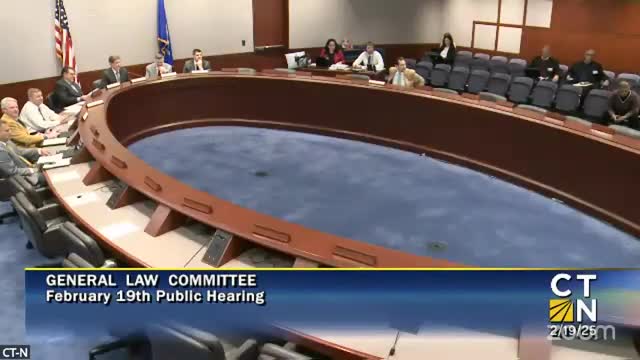
Summary
Sen. Bob Duff testified in favor of a net equity bill requiring affordable home internet for low‑income households and suggested raising the minimum speed to the Federal Communications Commission standard of 100/20 Mbps.
Sen. Bob Duff testified Feb. 19, 2025, in support of legislation to establish a statewide “net equity” program that would require the Department of Consumer Protection to set up an affordability program and condition some state contracting on ISPs offering low‑cost home internet to eligible households.
The bill would require the Department of Consumer Protection (DCP) to create a net equity program and would limit program eligibility to households participating in specified public assistance programs, Duff said, adding a price cap that would qualify service at no more than $40 per month.
Duff asked the committee to amend the bill so the required minimum internet speeds match the Federal Communications Commission’s current broadband definition: 100 megabits per second downstream and 20 megabits per second upstream. “That’s their definition, not mine,” Duff said, arguing the higher speed better meets contemporary needs for remote work and school.
Committee members asked whether the bill was modeled on other states; Duff said New York has a similar law and uses the higher speed standard. Representative Turco asked about program verification for household eligibility; Duff said the program would be limited to participants in SNAP, Husky Health and Connecticut Energy Assistance, and that DCP would stand up verification procedures.
No vote was recorded at the hearing. Committee members said they would continue to review the bill’s details and its interaction with federal programs and existing state broadband initiatives.