
Farm Bureau urges committee to retain 25% Connecticut juice requirement for farm wineries
Get AI-powered insights, summaries, and transcripts
Subscribe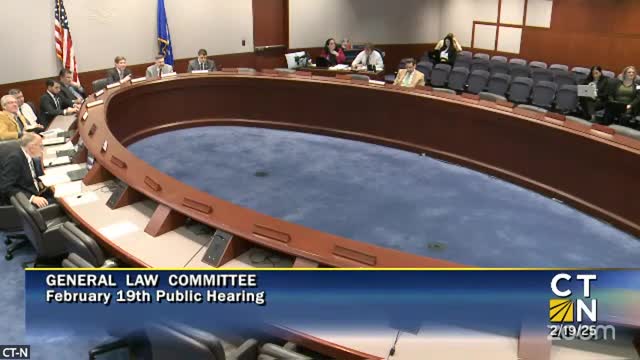
Summary
The Connecticut Farm Bureau opposed lowering the required in‑state juice percentage for Connecticut farm winery labeling from 25% to 20%, saying the existing threshold supports local growers and product identity.
The Connecticut Farm Bureau testified Feb. 19, 2025, against House Bill 5,361, which proposes lowering the minimum proportion of Connecticut‑grown juice required for a product to be designated a Connecticut farm winery product from 25% to 20%.
Tracy McDougall, executive director of the Connecticut Farm Bureau, told the committee the 25% minimum — established in a 1978 statute creating Connecticut farm wineries — protects the integrity of a Connecticut wine label, sustains demand for locally grown fruit and encourages farmers to grow grapes for winemaking. “If we lower it anymore, I'm not sure how we can call it Connecticut wine,” she said.
McDougall said the current rule provides marketing benefits and legal designation to farm wineries; lowering the threshold would reduce incentives for growers and could hurt the state’s wine reputation. She also noted that producers who find the threshold burdensome may instead seek a wine/mead/cider license that allows imported juice.
Committee members asked for more precise data on how much Connecticut grape juice individual wineries use and whether larger growers sell Connecticut fruit to smaller operations; McDougall said she would follow up with firm numbers and recommended consulting the Liquor Control Commission for licensing details.
No vote was taken at the hearing; committee staff said they would gather additional information requested by members.