
Committee advances bill limiting HOA foreclosures for small delinquencies
Get AI-powered insights, summaries, and transcripts
Subscribe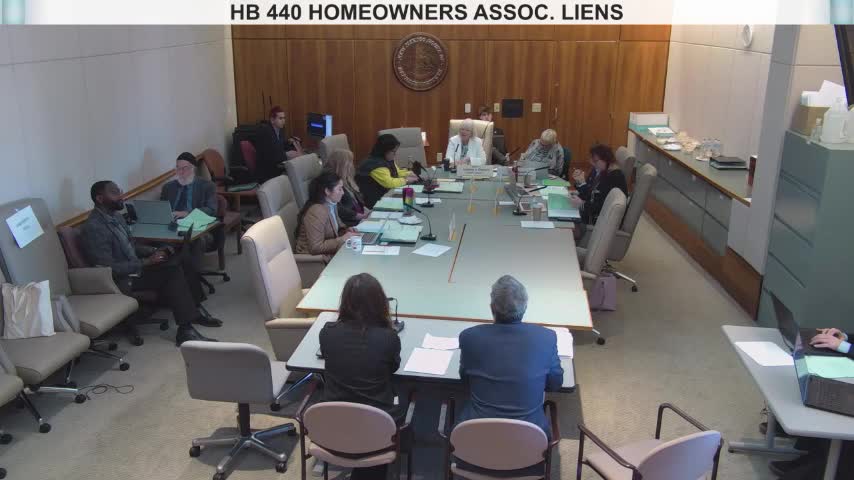
Summary
House Bill 440 would limit homeowners‑association foreclosures by prohibiting foreclosure of liens that are less than 12 months delinquent, under $5,000, or composed only of fines; the committee gave the bill a due‑pass recommendation after advocates and homeowners testified of aggressive lien and foreclosure practices.
Senator Luhan and Representative Maestas presented House Bill 440 to restrict homeowner association (HOA) foreclosures on small or short‑term delinquencies. The measure would prohibit an HOA from foreclosing on a lien that is less than 12 months delinquent, is under $5,000 in total, or consists solely of fines.
Sponsor Senator Maestas said the bill does not prevent HOAs from collecting debts; rather it aims to prevent “predatory association foreclosures” where small fines or short delinquencies result in foreclosure and loss of a homeowner’s property. He described the change as a reasonable middle ground to protect homeowners who remain current on mortgages but face aggressive HOA enforcement.
Homeowners who testified recounted cases in which HOA collections produced large attorney‑fee bills and foreclosure threats; one witness said litigation costs exceeded $57,000 in a dispute that was eventually resolved. The New Mexico Association of Realtors’ representative, Kent Cravens, spoke in support and told the committee the bill would stop a harmful practice.
Lawmakers discussed whether judges retain discretion to deny attorney‑fee awards and whether the $5,000 threshold should be adjusted; sponsors said the bill would not bar legitimate lien enforcement but would narrow the circumstances that lead to foreclosure.
The committee advanced the bill with a due‑pass recommendation by a 4‑2 vote and the measure will proceed to further floor consideration.