
Tribal leaders urge Congress to secure IHS, BIA and EPA funding, boost public safety and finish water settlements
Get AI-powered insights, summaries, and transcripts
Subscribe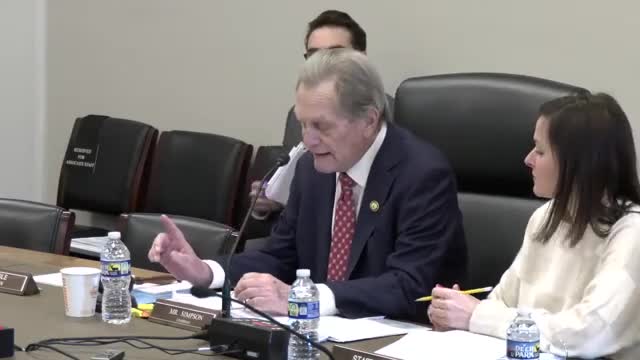
Summary
At a House Appropriations public witness hearing, tribal leaders from across the country warned that proposed cuts and personnel changes threaten health care, law enforcement and infrastructure on reservations and asked the subcommittee to protect and expand Indian programs, fund detention and water projects, and preserve programmatic exemptions.
WASHINGTON — Tribal leaders from Montana to New York told the House Appropriations subcommittee on (Interior, Environment, and Related Agencies) at a public witness hearing that proposed federal cuts and staffing changes are worsening crises in health care, public safety, water and infrastructure on reservations.
Representatives of Fort Belknap, Rocky Boy, Fort Peck, the Confederated Salish and Kootenai Tribes, the Seneca Nation, Northern Cheyenne and dozens of other tribal governments urged the committee to shield Indian Health Service (IHS), the Bureau of Indian Affairs (BIA) and Environmental Protection Agency (EPA) funding from sequestration or broad personnel reductions and to expand advanced appropriations and mandatory funding where possible.
Why it matters: Tribal leaders said federal budget instability and personnel losses disrupt essential services — from clinic operations to on‑reservation law enforcement — and aggravate public‑health and public‑safety emergencies that tribes cannot solve without sustained federal support.
Tribal officials repeatedly asked the subcommittee to exempt funding and personnel tied to treaty and trust obligations from across‑the‑board cuts. Harlan Baker, chairman of Rocky Boy, told the committee that ‘‘the federal trust and treaty obligation must be fulfilled regardless of broader budgetary concerns’’ and urged protection of IHS and BIA budgets to prevent further harm to patient care and public safety.
Law enforcement and detention Northern Cheyenne President (name given as) James Small and other leaders described severe law‑and‑order shortfalls tied to BIA Office of Justice Services funding. Northern Cheyenne requested a one‑time $35 million appropriation to build a replacement 80‑bed adult detention center and asked the subcommittee to increase BIA OJS law enforcement funding by at least 20 percent to hire and retain officers. The tribe said violent and property crime has surged since its on‑reservation jail closed and the number of officers was halved; witnesses said BIA OJS is currently funded at ‘‘less than 13 percent of total need’’ according to an agency report cited by testimony.
Jeffrey Stacarm, president of the Fort Belknap Indian Community, and Ryan Roushey (speaking for Fort Peck) also described understaffed tribal law enforcement covering vast reservations, limited detention capacity, and rising drug‑related crime tied to fentanyl and methamphetamine.
Health care, behavioral health and Medicaid Multiple speakers urged continued or expanded advanced appropriations for the IHS and protection of Medicaid access that funds tribal health programs. Leech Lake secretary‑treasurer Lenny Feindy and Mille Lacs Chairman Virgil Wind asked the committee to expand advance appropriations for IHS to include sanitation, health‑care facilities construction and contract support costs, arguing those steps would shield tribal health programs from shutdowns and funding disruptions.
Rocky Boy’s testimony requested protection for Medicaid funding — noting tribal facilities rely on Medicaid for 30–60 percent of operating revenue — and highlighted that small allocations for detox and substance‑use treatment leave programs underresourced.
Water infrastructure and settlements Several witnesses sought congressional action and funding to complete settled or court‑recommended water agreements and to support rural water system operations. Ryan Roushey said Fort Peck’s rural water OM&R (operation, maintenance and replacement) needs $4,965,000 for FY2026, a $460,000 increase over expected FY2025 funding. Wina Supranaw of the Quapaw Nation requested congressional appropriation to implement a 2020 federal court settlement in Thomas Charles Baer et al. v. United States that awarded roughly $137.5 million; she said more than five years have passed without full payment.
Tule River Chairman Shayanita and other witnesses described chronic water shortages on reservations, urged passage of negotiated water settlement legislation, and said settlements are preferable to costly and protracted litigation.
Tribal self‑governance, 105(l) leases and the Tuwahi/Tawahi initiative Multiple witnesses urged expansion of tribal self‑governance under ISDA and related laws. Several speakers asked that 105(l) lease funding be made mandatory, and multiple tribal leaders praised the ‘‘Tuwahi’’ (variants in testimony: Tawahi, Tuahy) initiative as an effective self‑governance model that reduces red tape and improves outcomes in foster care, suicide prevention, reentry and housing.
Energy, utilities and economic development Speakers from California tribes described efforts to achieve tribal energy sovereignty through tribal utility authorities and microgrids. Ken Auman, director of Colusa Indian Energy, described an off‑grid microgrid operating without outages for more than a decade and urged continued support for the Department of Energy Office of Indian Energy, reforms to the DOE Loan Programs Office application processes, and preservation of tax incentives and direct‑pay options (investment tax credits) that enable tribal projects.
Wildfire, forestry and workforce Mooretown Rancheria and Confederated Salish and Kootenai Tribes urged strengthened government‑to‑government forest partnerships that use existing authorities (for example, the Tribal Forest Protection Act, Indian Self‑Determination Act and related interagency tools) to accelerate fuels reduction, access agency equipment and stabilize cash flows for tribal crews doing hazardous fuels work.
What leaders asked the subcommittee to do Requests heard repeatedly included: (1) protect IHS, BIA, EPA and related tribal funding from sequestration and hiring freezes; (2) expand advanced appropriations or mandatory funding for IHS (including sanitation and facilities construction), contract support costs and 105(l) lease funding; (3) provide targeted appropriations for on‑reservation detention and public‑safety infrastructure (Northern Cheyenne $35 million jail request cited specifically); (4) fund rural water OM&R and finalize court‑ordered settlements (Quapaw Baer settlement and Tule River settlement among items raised); and (5) preserve or expand federal programs that enable tribal self‑governance, energy projects and forest restoration partnerships.
Ending note Witnesses told the subcommittee that these funding and policy changes are not charity but fulfillment of long‑standing treaty and trust obligations. ‘‘The federal trust and treaty obligation must be fulfilled,’’ Harlan Baker testified, ‘‘regardless of broader budgetary concerns.’' The subcommittee closed the hearing with members thanking witnesses and noting the committee will review testimony as it drafts appropriations language.