
Subcommittee hears bipartisan calls to deepen alliances, accelerate defense industrial cooperation in Indo‑Pacific
Get AI-powered insights, summaries, and transcripts
Subscribe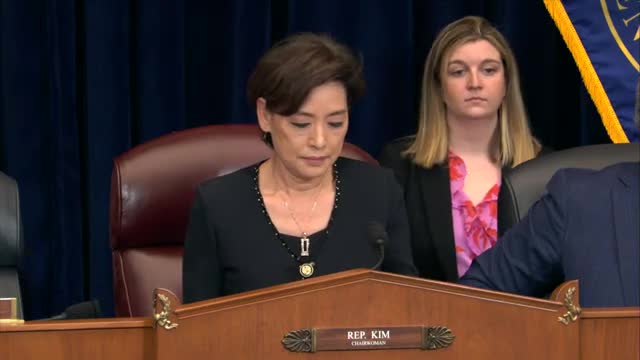
Summary
Witnesses advised the committee to sustain trilateral and Quad diplomacy, expand AUKUS cooperation, and pursue defense-industrial and energy partnerships with allies to deter Chinese and North Korean threats; members pressed for concrete, rapid wins in co-development and production.
Chairwoman Sharon Kim framed the hearing as an evaluation of U.S. strategy in East Asia and the Pacific and an opportunity to identify steps "to strengthen our engagement in the region."
Nut graf: Across party lines, members and witnesses urged the next administration to deepen alliances with Japan, South Korea, Australia and the Philippines, scale co-development of defense systems with partners and produce quick, demonstrable outcomes under AUKUS pillar 2 and allied industrial projects to restore deterrence.
Witness Jack Cooper laid out five ideas for allied cooperation: an allied defense arsenal for co-production of munitions and autonomous systems; allied energy production and exports; formation of a Taiwan contact group for resilience and capabilities; a trade deal with the Philippines; and a major strategic engagement with Indonesia. Cooper said, "The United States remains vital to security and prosperity across the Indo Pacific."
Richard Fontaine and Craig Singleton emphasized that diplomatic and military steps must be matched by industrial capacity and defense spending. Singleton said the U.S. approach under the prior administration "amount[ed] to diplomacy without much deterrence" and recommended targeted export controls, outbound investment screening and sanctions to deny China access to critical technology.
Members raised specific industrial and posture items. Chairwoman Kim pointed to allies' commitments: "Allies like Korea and Japan, they have taken steps to assist the U.S. defense industrial base ... Japan has already committed 1 trillion dollars," she said. Members asked how to align co-production efforts with American innovation and industrial capacity, and how to accelerate AUKUS pillar 2 projects to yield "quick visible wins." Fontaine advised pursuing projects such as quantum and unmanned undersea vehicles and said "the hard work has been done" on export-control and ITAR reforms that facilitate cooperation.
On force posture and deterrence, speakers warned that U.S. net military deployments to Asia have been flat while China has increased capabilities, and that renewed attention to force posture, allied basing arrangements and allied investments in their own defense are required. Cooper also cautioned that growing concern in South Korea about deterrence could spur proliferation.
Ending: Members signaled support for legislative and administrative efforts to speed co-development and trusted supply chains, while calling for more sustained diplomatic engagement through high-level meetings and congressional delegations to translate strategy into near-term industrial and security outcomes.