
Senate Education Committee advances five education measures; debates sign-language interpreter standards
Get AI-powered insights, summaries, and transcripts
Subscribe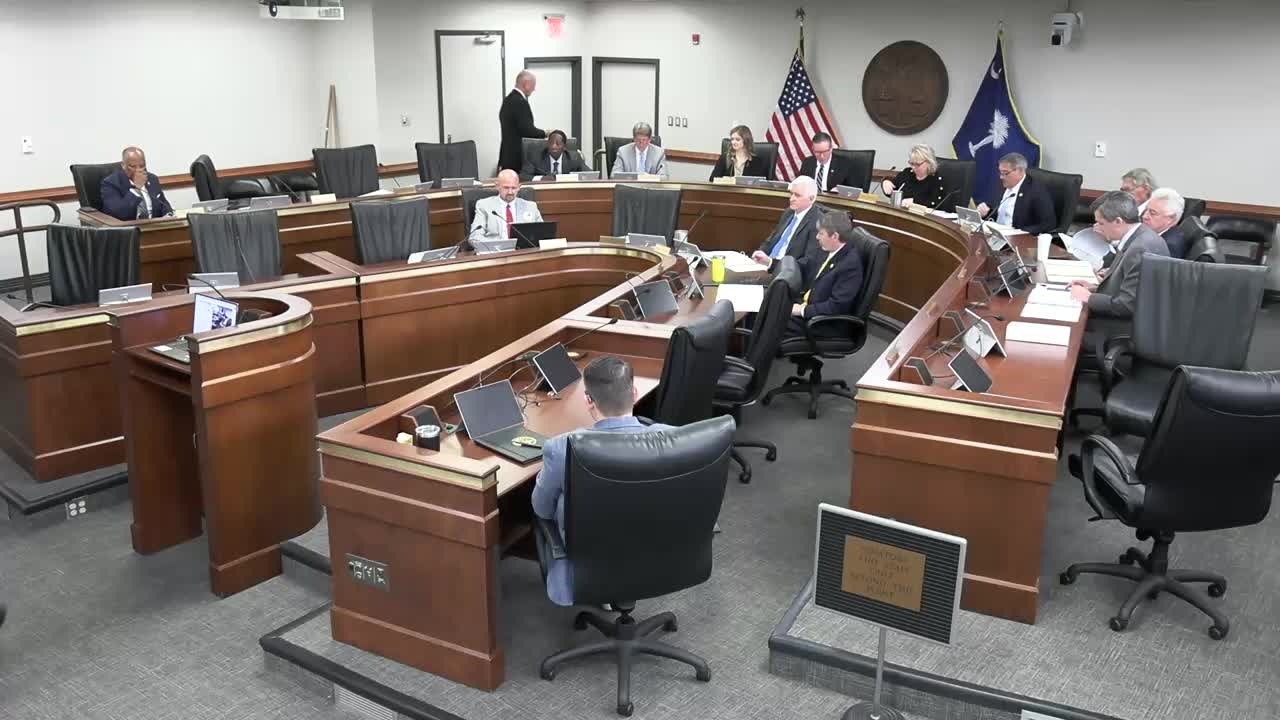
Summary
The committee adopted a five-year pilot allowing non‑certified teachers in eligible schools, approved an excused‑absence policy for career and technical student organizations, forwarded several regulatory updates, and discussed proposed standards for sign-language interpreters that could reduce the statewide pool of interpreters.
The Senate Education Committee on Oct. 12 approved a package of education measures and forwarded them to the full Senate while discussing concerns about a separate regulation on sign-language interpreter qualifications.
The committee approved S 79, a bill that would create a five‑year pilot allowing eligible schools to hire non‑certified teachers for up to 10% of their teaching staff. Donna Barton, the committee research director, summarized the proposal: "This is a bill to establish a 5 year pilot program that will permit a school within certain overall ratings or is located in a critical geographic area to hire non certified teachers in a ratio of up to 10% of its entire teaching staff." The bill requires non‑certified hires to hold at least a bachelor's or graduate degree in the subject area and at least five years of workplace experience; hires must enroll in a certification program within three years. The committee adopted subcommittee amendments clarifying background-check language and adding due-process protections for dismissed non‑certified teachers, and it approved an amendment extending eligibility to any willing school regardless of rating. The committee voted to forward S 79 with amendments to the full Senate; staff were authorized to make conforming changes before the bill goes to the floor.
The committee also considered H 3247, which would require school districts to adopt policies allowing excused absences for students participating in career and technical student organization activities; the committee adopted an amendment limiting such excused absences to no more than 10 school days per school year and forwarded the bill with a favorable report.
Regulatory updates were advanced to the full Senate as well. The committee confirmed proposed amendments to certification requirements for school administrators and certain instructional-service fields (document 53‑18), updates to the LIFE Scholarship regulation to reflect Act 156 of 2024 (document 53‑21), companion amendments to the Palmetto Fellows Scholarship regulation (document 53‑22), and a housekeeping update to assessment-program regulation language to replace older references to No Child Left Behind with the Every Student Succeeds Act (document 53‑59). All four regulations received favorable reports from the committee and will be forwarded to the full Senate.
Committee members spent additional time on a separate proposed regulation to set statewide qualification standards for sign‑language interpreters serving in schools. Committee discussion, led by the subcommittee chair and others, noted there are fewer than 100 interpreters statewide and that implementing national testing criteria could remove roughly 25% (and possibly up to 50% under stricter timelines) of current interpreters from the workforce. Members highlighted a tradeoff: higher interpreter standards would increase the quality of classroom interpretation — "these children are not getting all the instruction that they need because the interpreters aren't translating all of it," one senator said — but would also risk leaving some students without any interpreter coverage in the short term. The committee did not approve that regulation and discussed a stakeholder process; Representative Bradley (House) has requested a stakeholder meeting and a withdrawal/resubmission approach so the department can refine the proposal and address timelines and training capacity.
Next steps: S 79, H 3247 and the four regulations will be reported to the full Senate for consideration. The sign‑language interpreter regulation remains under review; committee members asked the Department of Education and stakeholders to revisit testing timelines, local training capacity (including the state School for the Deaf and Blind and Clemson resources) and potential pay‑scale changes tied to certification.