
Norwood planners begin phase 2 of comprehensive plan update, seek public input
Get AI-powered insights, summaries, and transcripts
Subscribe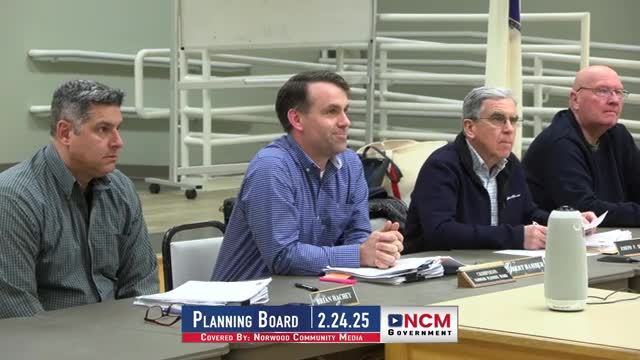
Summary
Consultant JM Goldson summarized Phase 1 findings for Norwood and opened Phase 2 engagement, highlighting population growth, aging, rising housing costs and climate risks and urging residents to use online tools and in-person "meeting in a box" events.
Laura Smead, principal planner at JM Goldson, told the Norwood Planning Board on Feb. 24 that the consultant team has completed Phase 1 of the townwide comprehensive plan update and is launching Phase 2, a community visioning stage that will run through June.
"This isn't our plan. This is your plan," Smead said as she described the process and the project timeline. She said Phase 1 produced an existing-conditions summary and that Phase 2 will collect community values and draft a 10‑year vision, guiding principles and goals that will lead into Phase 3 strategy work next fall.
The consultant presented six key trends the team says are shaping Norwood: population growth, an aging population, racial and ethnic diversification, shrinking household sizes, rising housing costs and affordability challenges, and growing climate and extreme‑weather risks. Smead cited data showing Norwood’s median household income in 2024 at $98,653 and summarized recent price changes since 2016: single‑family median sale prices up about 30 percent, condominiums up about 60 percent and rents up about 21 percent.
Smead said smaller households plus population growth imply a need for more housing units and housing types tailored to older adults and smaller households. She also highlighted the town’s strong infrastructure capacity (water and sewer) and the proximity of rail and regional transportation as assets for managed growth.
On climate and equity, Smead pointed to the town’s Municipal Vulnerability Preparedness (MVP) and hazard‑mitigation work, showing flood and urban heat vulnerability maps used to guide strategy. She noted crash‑cluster heat maps that identify safety concerns on higher‑speed roads and said open‑space access is generally good in residential areas.
Smead outlined engagement tools for Phase 2: an online survey, an interactive crowd map, a downloadable ‘‘meeting in a box’’ packet for group conversations, tabling and in‑person drop‑in sessions. She said approximately 157 survey responses, 95 crowd‑map suggestions and about 38 sign‑in participants had already been recorded; the team reported 358 total participation points so far and set an outreach goal of about 3,000 participation points.
During public comment, attendees pressed for a broad approach—beyond zoning—urging the plan to address schools, the airport, open space and business needs. Planning Board members and staff emphasized that Phase 2 is intended to capture community priorities, while policy and implementation choices will be further developed in later phases.
Smead said the project web page and engagement tools are available at tinyURL.com/NorwoodCP and urged residents and business groups to respond to the survey and host or attend meeting‑in‑a‑box sessions.
Looking ahead, the consultant and staff said Phase 2 engagement will continue through March and will be synthesized in late spring, with a follow‑up presentation to the board expected in June.