
Committee hears bill to establish Oregon trade centers in Taiwan and Vietnam, funds initial startup at $500,000
Get AI-powered insights, summaries, and transcripts
Subscribe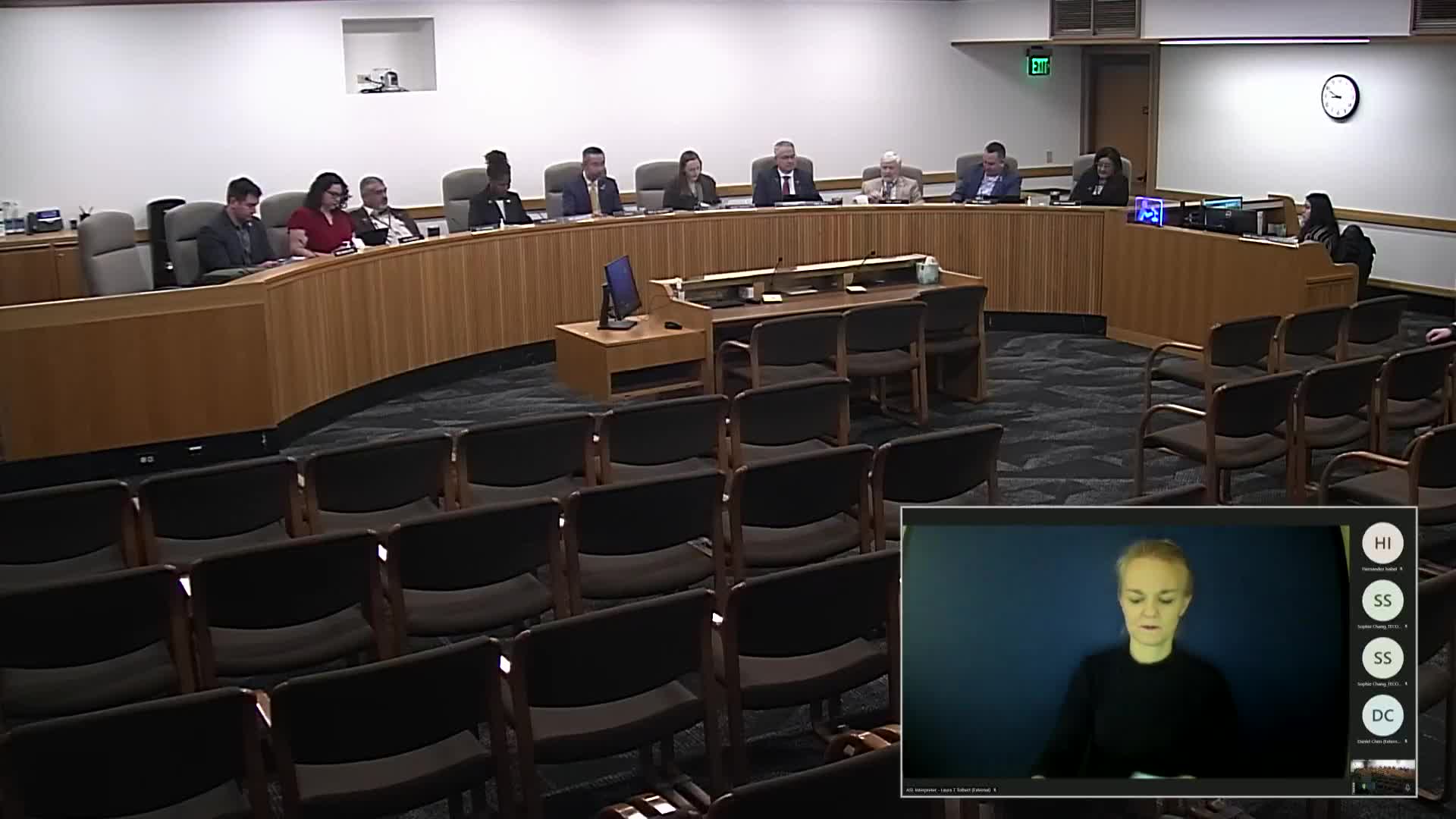
Summary
House Bill 2756 would appropriate $500,000 to Business Oregon to establish the Oregon Taiwan Trade Center and the Oregon Vietnam Trade Center, specify staff roles at each center, and require a study and legislative collaboration; proponents cited Taiwan and Vietnam as priority markets and urged modest startup funding with options to expand.
SALEM, Ore. — The House Committee on Economic Development, Small Business and Trade on Feb. 26 held a public hearing on House Bill 2756, which would appropriate $500,000 to the Oregon Business Development Department (Business Oregon) to establish an Oregon Taiwan Trade Center and an Oregon Vietnam Trade Center and to study options for additional overseas offices.
The bill sets initial staffing expectations and directs Business Oregon to collaborate with appointees including two members of the Senate, two members of the House and governor‑appointed subject‑matter experts. A dash‑1 amendment posted with the bill would permit Business Oregon to establish up to five additional trade centers or offices in countries the department determines are critical commercial partners.
Representative Paul Evans and House Pro Tem David Gomberg testified in support. Evans said the measure would open markets where Oregon can be a "bigger fish in a smaller pond," and emphasized ties with Taiwan and Vietnam cultivated through recent trade missions. "It would set up a trade center in Taiwan the first year...and it would set up a second, trade center in Vietnam," Evans said.
Gomberg highlighted the practical factors for successful export growth: "Successful trade depends essentially on three factors. It depends on having quality products that people want to buy. It depends on having the infrastructure that will get your products to those markets. And in a much more subtle but equally important way, it depends on relationships," he said.
Testimony in support also came from Daniel Guachin Chen, director general of the Taipei Economic and Cultural Office in Seattle, who said 24 U.S. states already operate trade offices in Taiwan and urged Oregon not to lose competitive ground. Paul Evans and Gomberg pointed to agriculture, semiconductors, renewable energy, battery manufacturing and emergency‑management/resilience industries as sectors with growth potential in the targeted markets.
Questions from committee members focused on the size and durability of the appropriation, staffing prescriptions and Business Oregon’s capacity to add new offices. Representative Osborne asked whether the $500,000 was a one‑time or biennial amount and who would manage the funds; proponents said the amount reflected startup costs and that a larger long‑term budget might be necessary. Representative Scarlatos asked why the staffing list included an emergency management expert; Evans replied that resilience and emergency‑management products and services are growing export industries.
Representative Blytheley and others asked whether Business Oregon had been consulted about capacity to implement the centers; proponents acknowledged the agency’s prior role in overseas trade offices and noted some offices were closed in 2009. Several committee members asked for more information on implementation timelines, management costs and how the centers would be evaluated.
Outcome: the committee heard testimony and closed the public hearing on House Bill 2756; no vote was recorded during the session. The committee then adjourned.