
House passes bill to let Corporation Commission set permitting rules for renewable energy facilities
Get AI-powered insights, summaries, and transcripts
Subscribe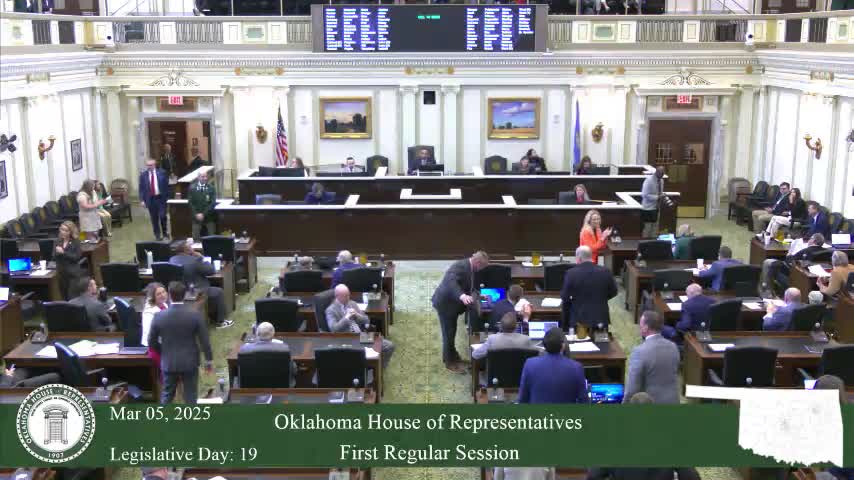
Summary
House Bill 2155 creates a procedure for the Oklahoma Corporation Commission to promulgate permitting rules for renewable energy facilities, including landowner notification, a complaint resolution process and a permit fee scaled by size and capacity; the House passed the bill 82-11.
House Bill 21 55 passed the Oklahoma House on Wednesday, establishing a procedure for the Oklahoma Corporation Commission to promulgate rules for permitting and regulating renewable energy facilities. Representative Dobrinsky, who explained the bill on the floor, said the process follows a similar path to existing oil and gas regulation and includes landowner notification, a complaint resolution process and a permit fee based on project size and capacity.
"The process will allow a similar path to that of oil and gas industry in place for decades now," Representative Dobrinsky said during his explanation. He added the measure "is not designed to be restrictive" and stressed the inclusion of notification and complaint mechanisms.
Chairman Caldwell Trey moved to strike the title because of a fiscal impact; the motion to strike title was made on the floor and the bill was returned to the calendar for further proceedings. Later in the session the measure advanced and final passage was approved. The House recorded the final tally as 82 yeas, 11 nays and declared the bill passed; the presiding officer said the vote on the bill would be counted as the vote on the emergency.
The measure tasks the Corporation Commission with a rulemaking pathway for new renewable projects; it does not itself set fees or technical standards on the House floor. Lawmakers did not adopt an amendment on the chamber floor to change substantive regulatory language; the bill will proceed to the Senate.