
Committee approves amendment to require public comment on Corrections rulemaking and preserves specified security exemptions
Get AI-powered insights, summaries, and transcripts
Subscribe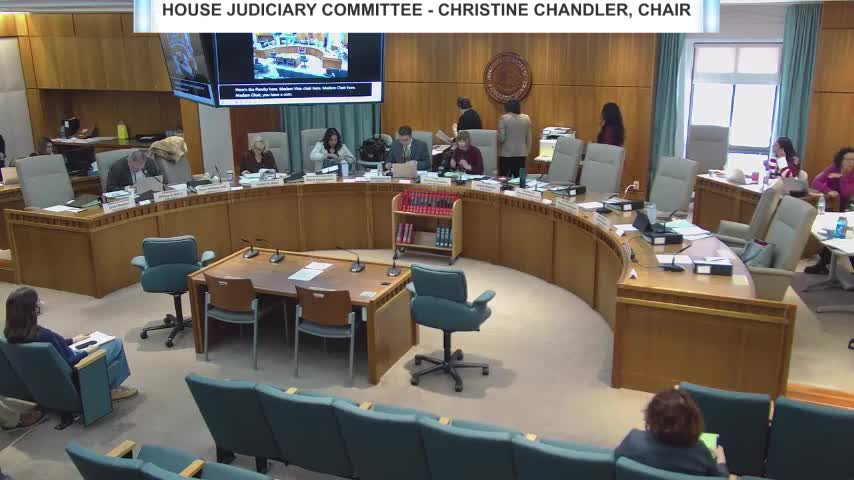
Summary
The committee amended and then passed House Bill 428 to remove a statutory exemption that had allowed the Corrections Department to avoid the state rules and Administrative Procedures Acts, while retaining limited exemptions for institutional security and emergency response. The amendment shortened the public-comment period from 45 to 30 days at
Vice Chair Cadena presented House Bill 428, which would remove language that exempted the New Mexico Corrections Department from the State Rules Act and Administrative Procedures Act and would require rulemaking to include public comment and posting in correctional facilities.
The corrections secretary, Alicia Tafoya Lucero, testified in opposition in the bill’s current form and said the department wanted explicit additional exemptions for emergency response and institutional security. AFSCME and other supporters said they would continue to work with the department on narrow security exemptions. Representative Cadena and union representatives negotiated an amendment that shortened the public comment period from 45 to 30 days and listed specific categories that could remain exempt for institutional security.
The committee adopted the amendment by voice and then moved the bill forward as amended. Representative Romero moved a due-pass on HB 428 as amended; the motion was seconded and the committee announced a due pass on the amended bill.
Why it matters: The change subjects the Corrections Department’s rulemaking to the same public-notice and comment requirements as many other state agencies while preserving narrowly tailored security exemptions the department sought.
Ending: Committee members said they expect continued work between the department, sponsor and labor representatives to refine exemptions and the final statutory language before the bill reaches the full House.