
Scott County social services seeks $37,000 local match for auxiliary grants after caseload rise
Get AI-powered insights, summaries, and transcripts
Subscribe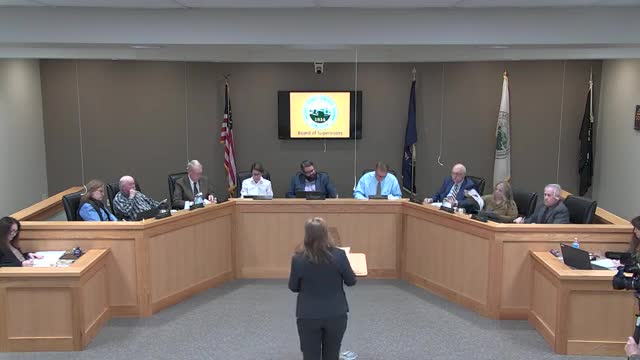
Summary
Scott County Department of Social Services told the board its auxiliary grant program for assisted-living payments is over budget this fiscal year and asked the board to consider a $37,000 local appropriation to draw down $184,000 in additional state funds; no board action was taken at the meeting.
Lana Mullins, director of Scott County Department of Social Services, told the Board of Supervisors the county’s auxiliary grant (AG) program is over budget and asked the board to consider adding local funds to capture more state money.
The AG program helps eligible aged, blind and disabled residents pay assisted-living costs that Medicaid does not cover. Mullins said the program is funded by a state/local split and is governed by state law.
The request matters because the county has already exceeded the AG line this fiscal year. Mullins said Scott County’s FY25 AG budget was $400,000 and year‑to‑date spending was $458,345. The state has allocated an additional $184,000 for the fiscal year; the county’s required 20% match on that increase would be about $37,000. Mullins asked the board to consider allocating that local match so the county can draw the state funds.
Mullins described the program and the funding mechanics: “This is different from Medicaid, because Medicaid cannot pay for room and board, so Medicaid does not pay for assisted living facilities. The AG program is funded by a combination of state and local funds. There’s no federal funding in auxiliary grants. The state funds comprise 80% of the funds we receive, and our locality makes up the 20% match,” she said.
Mullins also summarized population trends she said are driving higher demand: the county’s share of residents 65 and older rose from about 19% in 2010 to 26% by 2023. She said the AG caseload averages about 50 individuals and that new applications are pending.
Board members asked clarifying questions about the FY26 request and timing. Mullins said she increased the FY26 AG request to $700,000 as a precaution; she noted the county already has $80,000 budgeted locally for the program. She said the department monitors the AG account monthly and will absorb remaining costs from other DSS local funds where available, but wanted the board aware now rather than waiting until the last weeks of the fiscal year.
No formal appropriation or vote occurred at the meeting. Mullins said she would continue to track expenditures and return with any update; the board did not commit local funds at this session.
Mullins closed by offering to answer follow‑up questions and stressing the department’s intent to be transparent about the projected shortfall.